 RouteAll
Wyoming Permit Reading Guide
Sources Reviewed: October 23, 2026
Read a Wyoming permit by identifying its class, covered vehicle and load, designated roads and special conditions. Class D extended authority differs from a separate-movement permit. Check port-of-entry instructions and weather restrictions before departing; route alternatives need approval from the permit-issuing authority.
On This Page
Which Wyoming Permit Class Are You Holding?
Identify the Wyoming permit class before interpreting its duration or route authority. The Motor Carrier Section rules distinguish Class A superload approvals, separate-movement Classes B and C, and extended-period Class D permits. Other classes serve particular operations and should not be treated as generic hauling authority.
Write the class, covered vehicle and authorized operation on a separate trip checklist. Then compare that description with the actual load, rather than choosing conditions from a familiar previous permit.
- Class A: Locate the Overweight Loads Office approval and special instructions.
- Classes B or C: Read the particular movement, dates and route.
- Class D: Match the equipment and operations specifically covered.
- Other authority: Read the class-specific scope before assuming it fits the haul.
Our annual versus single-trip guide helps explain why a longer period does not automatically expand route authority.
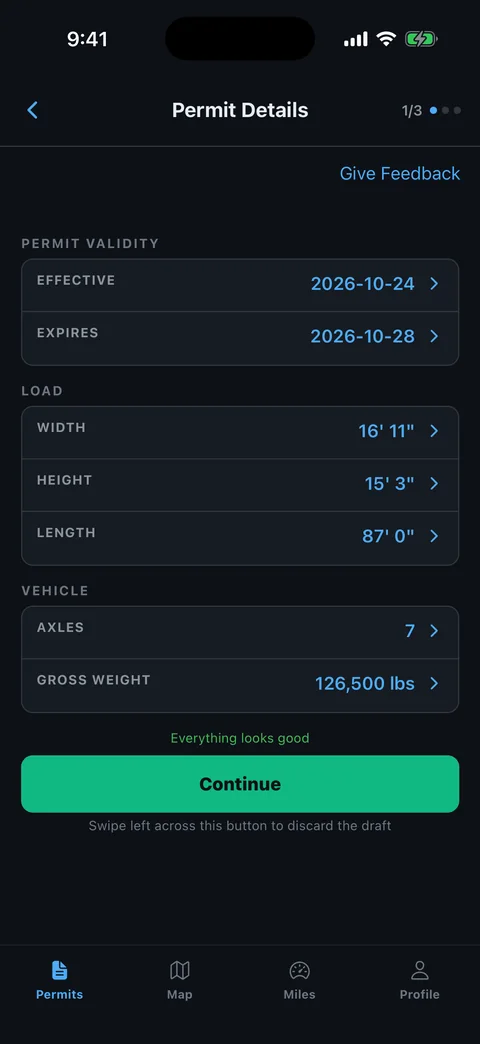
Does Wyoming’s Permit Cover This Exact Equipment?
Compare the vehicle, load and configuration on a Wyoming permit with the equipment ready to depart. Class D conditions in the official rules are equipment-specific, and listed equipment matters. A familiar carrier or repeated cargo does not remove that comparison.
Check the whole transport setup after loading and securement. Keep separate dimensions separate, especially when the load or equipment projects beyond the deck.
- Vehicle identity: Match each listed unit, plate or serial identifier.
- Dimensions: Check overall transport height, width, length and overhang.
- Axle arrangement: Compare weights and spacings with the configuration evaluated.
- Load: Confirm the description matches the object actually moving.
- Permit period: Read the current effective and ending information.
Use our permit errors checklist to document a changed setup. Ask the issuer about the necessary correction before relying on an older equipment entry.
What Should You Check About A Wyoming Port Of Entry?
Read the permit’s port-of-entry instructions and any stated exception before beginning the movement. Wyoming's permit rules require permitted loads to stop at the first available port within the rule's route-distance provision, unless the permit-issuing authority grants and records an exception. Additional signs can require a stop.
Locate the relevant port while planning the approved route. Do not decide that an app's bypass instruction or a convenient alternate road changes the permit’s instruction.
- Locate the port: Identify the entry point associated with the approved movement.
- Read the exception: Look for any permission specifically recorded for the permit.
- Check the approach: Review the road sequence needed to reach the required location.
- Resolve uncertainty: Ask the issuing authority about a port instruction you cannot reconcile.
Keep the current permit and supporting information available for inspection. Prepare that document package before the truck approaches the entry point.
How Do You Read Wyoming’s Route And Weather Conditions?
Follow the designated Wyoming roads and read the operating conditions attached to your movement. The escort rules require prior approval for alternate routes and address restrictions during adverse weather. An ordinary traffic detour is not a permit amendment.
Trace the route from the actual entry or loading point to the authorized destination. Keep each special instruction connected to the affected segment instead of reducing it to a general note about caution.
- Road sequence: Preserve directions, short connectors and repeated highway sections.
- Bridge operation: Read any required speed or other special procedure.
- Weather: Check the current travel status and applicable conditions before departing.
- Waiting plan: Identify appropriate places to stop before a restricted segment.
The travel-time planning guide helps organize a schedule around those conditions. It does not authorize travel when the issuer or highway status restricts the move.
Who Can Correct A Wyoming Permit Or Route?
Ask the Wyoming permit-issuing authority to resolve a changed route, equipment detail or travel period. WYDOT's commercial-permit page points to Highway Patrol and oversize application resources. Its electronic-permitting announcement explains the transition to the online system; the issued conditions still govern the movement.
Prepare a precise correction request with the existing document open. Describe a restriction by road, direction and location rather than only by the nearest town.
- Identify the conflict: State what the permit says and what has changed.
- Provide configuration: Include the measured load and relevant axle details.
- Request authorization: Ask which change or replacement permit is required.
- Review the result: Compare all roads, dates, equipment and special instructions again.
Brief the resolved route using the escort route-sharing workflow. Keep older permit copies outside the active package.
How Can RouteAll Help With A Wyoming Permit?
RouteAll can extract a printed permit route from a PDF or photo for manual review. With a Wyoming movement, keep the permit class, entry instructions and operating conditions beside that map. Navigation cannot decide that a particular exception or extended permit covers changed equipment.
Follow the permit PDF to GPS workflow using a complete readable copy. Compare the road sequence and trip boundaries before confirming the route.
- Entry point: Match the permitted start and any required port approach.
- Highway changes: Inspect short connectors and exact travel directions.
- Special conditions: Retain bridge, escort and weather instructions for the crew.
- Corrected document: Repeat the review after the issuer changes the route.
RouteAll does not issue or amend Wyoming permits, grant alternate-route authority or guarantee clearance. The driver resolves uncertainties and confirms the extraction before navigation.
Check Wyoming weather and road conditions against the permit, then follow the oversize permit route turn by turn, stopping at a port of entry if the permit requires it.
The Permit Check In One Minute
Identify the class of a Wyoming permit before planning the movement. Class D extended authority and separate-movement permits have different scopes, so compare the listed equipment and operation with the actual loaded vehicle. Trace the designated roads and read special bridge, escort and weather conditions. Check port-of-entry instructions and any exception recorded for your trip. If the equipment, route or schedule changes, ask the permit-issuing authority for the required correction rather than following a general traffic detour. RouteAll can organize a legible printed route for manual confirmation. It does not grant an exception, change the permit class or establish clearance. Keep the current permit and conditions available for the driver and escort.
Before You Roll
Check Wyoming’s permit class, listed equipment and port-of-entry instructions before departure. Obtain issuer approval for a changed route and recheck all special conditions.
Further Reading
Sources And Scope
This guide explains how to read the state’s published permit material. Your issued permit and incorporated conditions govern the move. Check the linked agency material for updates.
- Wyoming Motor Carrier Section Rules — Chapter 5 — Permit classes; equipment-specific Class D; port-of-entry instructions/exceptions; alternate route approval; weather and escort conditions.
- WYDOT Commercial Permits — Official Highway Patrol and oversize application resource links.
- WYDOT/WHP Electronic Permit System Announcement — Official electronic permitting transition and continued role of Highway Patrol permit authorities; dated September 2024.