 RouteAll
West Virginia Permit Reading Guide
Sources Reviewed: October 23, 2026
Read a West Virginia permit with special attention to bridge operations and monitoring. A low-impact condition is not simply advice to drive slowly: WVDOH requires the specified monitor. Match the truck, load, route and dates, then arrange every operation printed on the issued permit.
On This Page
Which West Virginia Permit And Supporting Instructions Apply?
Begin with the issued permit for the truck and loaded movement, then collect every special instruction that belongs to it. West Virginia's hauling-permit page says blanket permits are truck-specific. Do not treat a carrier's annual document as interchangeable among all vehicles in its fleet.
Separate the active permit from previous applications and permit copies. Keep any monitor arrangement or bridge-operation instruction with the current route, not in a different dispatch conversation.
- Truck identity: Match the assigned power unit with the issued authority.
- Load configuration: Compare dimensions, gross weight and axle information.
- Route pages: Retain the complete road list and travel direction.
- Special operation: Locate bridge instructions and monitoring requirements.
Our annual versus single-trip guide helps organize the difference between a longer permit period and authority for a particular trip.
What Does A Low-Impact West Virginia Permit Require?
A West Virginia low-impact instruction can require a monitor at specified bridges. WVDOH's low-impact guidance says the permit lists the bridges, locations, required speed and scheduling contact. Moving without a required monitor violates that condition even if you slow the truck yourself.
Read the whole operation before fixing the departure time. A bridge condition can create a meeting and scheduling dependency that a mileage estimate does not show.
- Locate each bridge: Match the named structure and position on the route.
- Read the speed: Preserve the exact issued operating instruction.
- Arrange the monitor: Use the scheduling information provided for the permit.
- Confirm the meeting: Brief the driver, escort and other support on the final arrangement.
The escort route-sharing guide helps everyone review the same trip. Sharing the route does not schedule the monitor or replace the monitor's role.
Can You Reuse A West Virginia Permit For An Identical Move?
No. West Virginia's FAQ says an identical recent movement may qualify for processing without full re-analysis, but you must still submit a new application. The repeat-move guidance calls for the previous permit number and matching details; it does not extend the old permit’s authority.
Compare the new trip with the earlier one before describing it as identical. A changed direction or axle spacing can be easy to overlook when the same cargo and destination are familiar.
- Roads and direction: Compare the complete route, not only the endpoint cities.
- Loaded dimensions: Check height, width, length and overhang.
- Weights and spacing: Compare gross, axle figures and configuration.
- New document: Review the newly issued travel window and conditions.
Use the permit errors checklist to organize the comparison. A successful prior trip is not evidence that today's equipment entries are correct.
Which West Virginia Route And Travel Conditions Need Attention?
Read route and travel authorization on the current West Virginia permit rather than carrying an earlier schedule forward. The official FAQ says weekend permission depends on the movement and should be requested. Conditions can be written directly on the issued permit after review.
Trace the route with the load and any special operation in mind. Keep a travel-time condition tied to its actual road segment instead of using a single statewide departure assumption.
- Route sequence: Check every road, direction and short connection.
- Current restriction: Review the construction resources linked from the permit page.
- Bridge operation: Locate reduced-speed or monitoring tasks before estimating arrival.
- Travel period: Read the permit’s dates with the applicable hours and special authorization.
Our travel-time planning guide helps organize the schedule. It does not grant weekend or nighttime authority for a particular load.
What Can You Change On A West Virginia Permit?
West Virginia's FAQ describes a limited, one-time amendment process for specified changes. Do not assume a different road, axle arrangement or load qualifies. Use the current amendment guidance and ask the permit office what authorization the actual change requires.
Prepare the correction request with the issued document open. Separate a plate typo from a different vehicle, and a date correction from a movement that has already begun.
- State the difference: Identify the exact permit entry and the actual required value.
- Explain timing: Note whether the permit is active and whether the move has started.
- Ask for authority: Request the appropriate amendment or replacement process.
- Review the outcome: Compare the new route, dates, equipment and bridge instructions.
Update every crew member's copy after a correction. A revised route can also change monitor arrangements, escort meetings and where the load can safely wait.
How Can RouteAll Help With A West Virginia Permit?
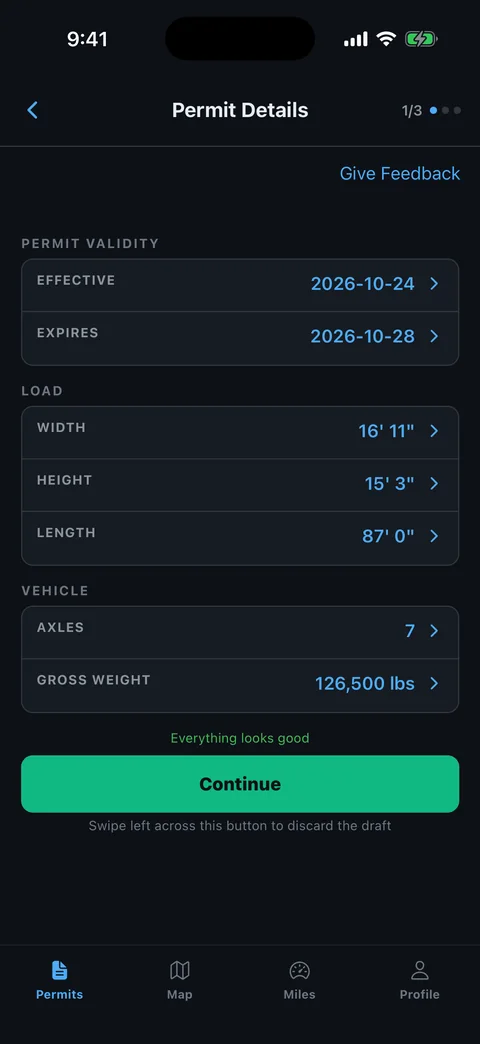
RouteAll can extract a permit PDF or photo into a route for manual review. With a West Virginia movement, keep the bridge instructions and monitor arrangements beside that review. A route map does not perform a low-impact crossing procedure or provide the required personnel.
The permit PDF to GPS workflow explains how to compare the extraction with the printed roads. Inspect the exact road changes before confirming navigation.
- Road order: Preserve short connectors and repeated road sections.
- Direction: Check that each segment follows the permitted movement.
- Bridge location: Keep special-operation notes linked to the correct crossing.
- Corrected route: Repeat the comparison when a new permit arrives.
RouteAll does not issue or amend West Virginia permits, schedule monitors or guarantee clearance. The driver confirms the extracted route after resolving any uncertainty in the source document.
Read the West Virginia route and travel conditions together, then follow the oversize permit route turn by turn on the day the permit allows.
The Permit Check In One Minute
A West Virginia permit can contain a bridge operation that needs more than careful driving. If low-impact monitoring is required, identify the listed bridges, read the required speed and arrange the monitor using the permit’s instructions. Compare the truck, loaded dimensions, weights and road sequence with the issued document. A repeat movement still needs a new application even when the earlier permit helps the review. Check travel permission on the current copy and ask about changes that exceed the state’s limited amendment process. RouteAll can organize the printed route for manual confirmation, but it does not book a monitor or replace the original operating conditions. Brief the crew from the same current permit.
Before You Roll
Arrange every monitor required by the West Virginia permit before scheduling the crossing. Compare the actual truck and configuration with the issued document and any revised bridge instruction.
Further Reading
Sources And Scope
This guide explains how to read the state’s published permit material. Your issued permit and incorporated conditions govern the move. Check the linked agency material for updates.
- West Virginia Oversize/Overweight Hauling Permits — Truck-specific blanket authority; low-impact bridge locations/speed/scheduled monitors; construction-resource links.
- West Virginia Hauling Permit FAQs — Repeat moves require new application; permit-specific weekend review; limited one-time amendments; configuration analysis.