 RouteAll
South Dakota Permit Reading Guide
Sources Reviewed: October 23, 2026
Read a South Dakota permit by checking the completed entries, exact route and any bridge-specific operating instruction. Match mileage reference markers with the affected highway locations. A clearance list helps with planning, but it does not establish clearance for every part of your load.
On This Page
Are All South Dakota Permit Entries Complete?
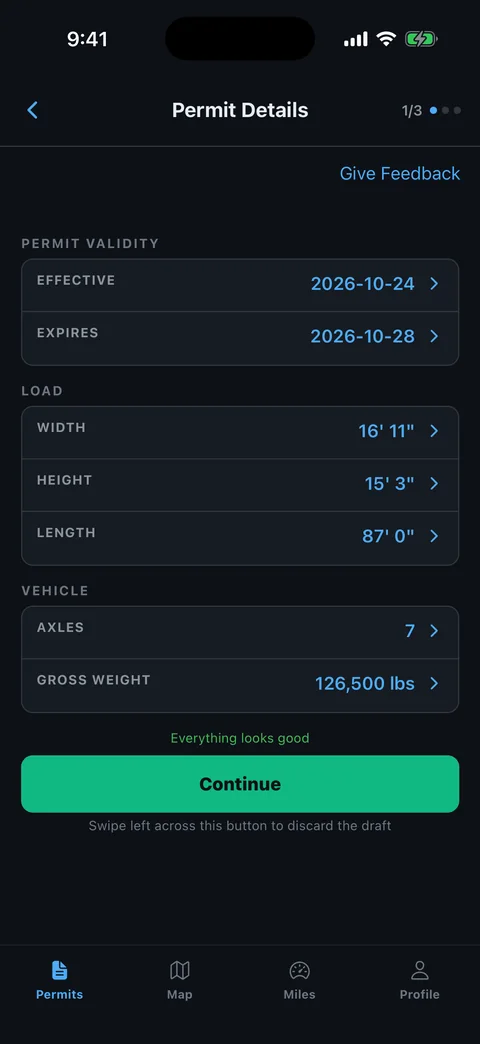
Check every required entry on a self-issued or telephonic South Dakota permit before using it. The official motor carrier handbook says incomplete required information can void the permit. A permit number by itself is not a substitute for a completed document.
Read the current issued copy alongside the loaded equipment and dispatch details. If someone else completed the form, review the values rather than assuming the completed boxes are correct.
- Vehicle details: Match the power unit, trailer and other printed equipment information.
- Load information: Compare the description and measured overall dimensions.
- Route and dates: Confirm the approved journey and usable period.
- Special conditions: Retain every instruction attached to the authorization.
Save the complete package where you can open it while parked. An application receipt, text message or payment record should remain separate from the document authorizing the movement.
What Does MRM Mean On A South Dakota Restriction?
MRM means mileage reference marker. South Dakota uses it to locate features on the highway system, but the reference numbers do not always correspond exactly to miles traveled. The official clearance and restriction guidance explains how to read these locations.
Use the road number and direction with the marker range. A marker alone is not a complete location, particularly when a restriction report contains several roads or parallel carriageways.
- Find the highway: Match the route identifier in the permit or notice.
- Locate the marker range: Identify both ends of the affected section.
- Check direction: Read whether the condition affects your direction or a particular lane.
- Connect the instruction: Keep the location beside the width, height or operating restriction.
Make a note that a driver and escort can identify together. The escort route-sharing guide helps coordinate that discussion around the same planned trip.
What Does A Bridge Operating Condition Mean?
A South Dakota permit can carry special instructions for a particular bridge, such as speed, escorts or centerline travel. The handbook's single-trip guidance lists these as possible conditions. Read the issued instruction as a coordinated operation, not a general suggestion about cautious driving.
Identify the structure before approaching it. Then brief the exact procedure with the people responsible for the movement. A familiar bridge on an earlier trip does not answer what this permit requires.
- Location: Match highway, reference marker and direction.
- Operation: Read the required lane position, speed or other restriction without abbreviating its meaning.
- Personnel: Confirm which escort or other support must be present.
- Readiness: Resolve an unclear instruction before arriving at the bridge.
Record the instruction in a separate working note, while preserving the original permit. If the route or equipment changes, ask the issuer whether the operating plan must change too.
Can You Rely On The South Dakota Clearance List Alone?
No. South Dakota's clearance list is for planning, and the permit holder remains responsible for checking the traveled route. The clearance guidance excludes power lines and signals and warns that clearances outside the through lanes can differ. Use the list as one part of the review.
Read the complete restriction description instead of comparing one height number with the cargo height. The truck's loaded configuration and intended path are the relevant comparison.
- Through lane: Identify where the published measurement applies.
- Outside the lane: Investigate shoulders, turning paths and other areas the load might occupy.
- Temporary work: Check current construction restrictions as well as permanent structures.
- Other obstacles: Arrange clarification or required survey work for utilities and signals.
Our permitted-route planning guide helps organize these questions before dispatch. A permit and a high enough listed bridge do not settle every clearance issue.
What If The South Dakota Load Or Route Changes?
Ask the permit issuer to resolve a change in the load, vehicle or approved route before relying on the old document. Provide the actual difference and the current permit details. Do not turn a route restriction into an improvised detour.
Measure the loaded configuration after the change. Repositioning equipment can affect height, axle distribution and overhang at the same time, so a correction request should include more than the new trailer plate.
- Identify the discrepancy: Compare the issued entry with the measured or observed condition.
- Locate the problem: Supply the highway, direction and marker range where relevant.
- Request instructions: Ask the permit center or ordering service what authorization is needed.
- Review the result: Recheck dates, roads and bridge instructions on the replacement document.
The permit errors checklist provides a practical way to gather those details without changing the issued copy.
How Can RouteAll Help With A South Dakota Permit?
RouteAll can extract a printed permit route from a PDF or photo for your manual review. Compare that route with South Dakota's issued road list and keep special bridge instructions alongside it. A navigation line does not carry out a centerline or reduced-speed procedure.
Use the permit PDF to GPS workflow with the complete readable package. Inspect roads, directions and route endpoints before confirming the extraction.
- Printed sequence: Preserve short connectors and any repeated roads.
- Location references: Keep marker-based restriction notes available for the crew.
- Conditions: Read operating tasks separately from turn-by-turn guidance.
- Uncertainty: Resolve a missing road or unclear instruction before confirming the trip.
RouteAll does not issue or amend South Dakota permits or guarantee clearance. It helps organize the route you review; the original authorization and conditions still need your attention.
South Dakota restrictions are located by MRM, so follow the oversize permit route turn by turn with the reference markers in view.
The Permit Check In One Minute
A South Dakota permit review begins with complete entries and the actual loaded equipment. Check the vehicle, dimensions, route, dates and every special instruction. MRM means mileage reference marker, so use the highway and direction with that reference rather than treating it as a precise trip-mile reading. Find any bridge that requires a particular speed, lane position or escort operation, and brief the crew before departure. The state clearance list is a planning resource and does not cover every utility or signal. Ask the permit issuer to resolve a changed load or route. RouteAll can help organize a readable permit route for manual confirmation, while the original conditions remain part of the trip.
Before You Roll
Check that all required South Dakota permit entries are complete. Locate every marker-based restriction and brief each bridge operation before the truck approaches it.
Further Reading
Sources And Scope
This guide explains how to read the state’s published permit material. Your issued permit and incorporated conditions govern the move. Check the linked agency material for updates.
- South Dakota Motor Carrier Handbook — Permit Application — Complete self-issued/telephonic entries; possession; permit terms; possible bridge operating and escort restrictions.
- Clearance And Route Restrictions — MRM meaning; planning-only list; through-lane limitations; utilities/signals excluded; clearance verification responsibility.