 RouteAll
Rhode Island Permit Reading Guide
Sources Reviewed: October 23, 2026
Read a Rhode Island permit by identifying its permit category, matching the vehicle and load, and checking the approved route against current RIDOT restrictions. Annual divisible-load authority is not oversize authority. Bridge and route-survey conditions deserve a separate review before departure.
On This Page
Which Rhode Island Permit Category Do You Have?
Rhode Island distinguishes annual divisible-load permits, annual blanket permits and single-trip permits. These categories cover different operations. The RIDOT permit FAQ specifically says annual divisible-load authority is not permission for oversize dimensions, even when the vehicle has that annual document.
Read the category name before comparing size or weight limits. Then match the kind of cargo described with the load actually moving. A document's long validity period does not answer which roads or dimensions it covers.
- Divisible-load authority: Identify whether the movement fits the commodity and weight permission.
- Blanket authority: Match the permitted equipment or marine-asset operation and conditions.
- Single-trip authority: Review the specific load, route and travel period issued.
The annual and single-trip guide explains why the permit category should be the first item on your trip checklist.
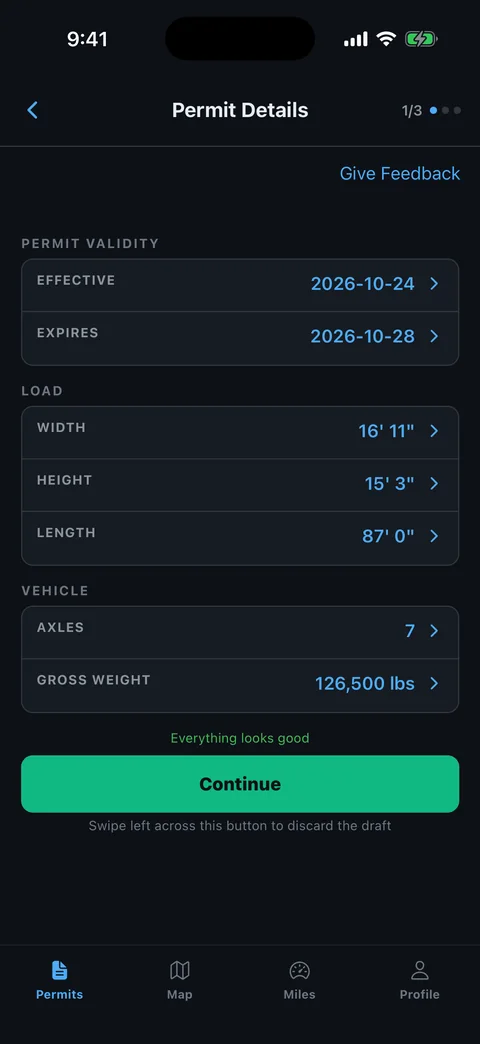
What Should You Compare With The Loaded Vehicle?
Compare your Rhode Island document with the actual loaded combination and its current registrations. Check every listed vehicle and dimension rather than relying on the carrier name alone. The right company can still receive a document that reflects an earlier trailer, load position or equipment plan.
Make the comparison after loading and securement. Use a separate checklist so the issued permit stays readable.
- Registered equipment: Match truck and trailer information shown on the permit.
- Load description: Check that it reflects the cargo and transport configuration.
- Overall size: Measure loaded height, width, length and projections.
- Weight: Compare gross and any printed axle figures with the current combination.
- Travel period: Verify the dates on the issued copy instead of calculating from the dispatch email.
Our permit errors guide helps turn a mismatch into a clear question for the issuer. Include the actual changed detail when asking for a correction.
How Do You Check Rhode Island’s Bridge Restrictions?
Use RIDOT's live truck-and-bridge restriction page to compare the permit route with current restrictions. The page separately links posted bridges, clearance maps and oversize travel restrictions. The official restriction resource provides road, direction and location details that a broad statewide map can miss.
Work through the route from entry to delivery. An interchange ramp or collector-distributor road can be a different piece of roadway from the mainline you expected to use.
- Match the road: Identify the correct number, carriageway and direction.
- Match the limits: Compare the relevant width, height or weight instruction with your load.
- Check the dates: Read whether the restriction remains active for the intended move.
- Resolve conflict: Ask the permit office about a restriction that appears incompatible with your authorization.
Keep a separate working note for each affected structure. Do not substitute another bridge merely because it reaches the same city.
What Does A Survey Or Escort Condition Require You To Do?
Rhode Island's FAQ says route surveys and escorts can be required according to load dimensions and the specific circumstances. Read those requirements on your issued permit and approval package. Do not assume that a pilot car's presence satisfies a missing survey or separate condition.
The RIDOT survey and escort guidance is a starting point for understanding why the issuer requested supporting work. Use the actual route and load configuration when preparing the crew briefing.
- Survey coverage: Confirm which roads and direction the approved survey addresses.
- Measured configuration: Compare the surveyed setup with the load that will depart.
- Escort role: Identify the required position, equipment and meeting point from the issued instructions.
- Coordination: Resolve missing approvals or personnel before approaching the affected road.
The pilot-car route-sharing workflow helps a driver and escort discuss the same route. It does not authorize traffic control or replace a required survey.
Who Handles A Rhode Island Permit Problem?
Direct a permit or route question to RIDOT, and separate it from a payment or login problem. The official FAQ distinguishes permitting contacts from portal technical support. That distinction helps you ask the right organization to correct the actual issue.
Before calling, identify the document and the exact point that conflicts with your intended movement. A question about a specific ramp or axle entry is easier to resolve than a request to approve the whole trip verbally.
- Describe the issue: Give the permit number, affected road and relevant measured load detail.
- State the timing: Explain whether the move has begun and which travel dates are printed.
- Request instructions: Ask which correction or further approval is needed.
- Review the result: Compare the replacement document with the vehicle and complete route.
Update the dispatch and escort copies together. Do not leave an older road list active after a corrected permit arrives.
How Can RouteAll Help With A Rhode Island Permit?
RouteAll can extract a printed permit route from a PDF or photo for your manual review. In Rhode Island, compare the exact roads and ramps with the issued document and keep current bridge restrictions beside that review. A destination pin does not explain which bridge is permitted.
Follow the PDF permit to GPS guide and inspect each road change before confirming the route. Keep the category, conditions and other approvals accessible as separate documents.
- Boundary points: Match the actual state entry and delivery access.
- Bridge approach: Check the correct direction and connecting roadway.
- Short segments: Compare ramps and nearby parallel roads carefully.
- Unclear extraction: Resolve a missing road or uncertain turn before using navigation.
RouteAll does not issue or amend Rhode Island permits or certify that a bridge accommodates your load. The driver still checks the permit and confirms the extracted route.
Check every Rhode Island bridge restriction before you follow the oversize permit route turn by turn, and do not swap one bridge for another.
The Permit Check In One Minute
Begin a Rhode Island review by naming the permit category. An annual divisible-load permit is different from annual blanket or single-trip authority, and it does not authorize oversize dimensions. Match the issued document with the loaded equipment, including the current registrations, measured size and weights. Trace the roads and ramps against RIDOT’s current bridge and travel restrictions. Read any survey or escort condition as its own task, with the correct load and route. Send permitting questions to RIDOT and portal problems to technical support. RouteAll can help you turn a legible route document into navigation for manual review, but it does not approve a bridge crossing or amend the permit.
Before You Roll
Confirm the Rhode Island permit category and inspect each affected bridge approach in the correct direction. Resolve a current restriction or missing survey condition with RIDOT before departure.
Further Reading
Sources And Scope
This guide explains how to read the state’s published permit material. Your issued permit and incorporated conditions govern the move. Check the linked agency material for updates.
- Statewide Truck And Bridge Restrictions — Posted bridges, clearance maps, oversize route/direction restrictions and active construction notices.
- RIDOT OSOW FAQs — Three permit types; divisible-load scope; vehicle information; survey/escort review; permit and technical-support contacts.