 RouteAll
Maryland Permit Reading Guide
Sources Reviewed: October 23, 2026
Read a Maryland hauling permit as a package: the issued authorization, approved route, applicable conditions, and any required survey. Compare those documents with current State Highway Administration restrictions. Maryland One directions need a fresh review when a closure or changed load affects the authorized movement.
On This Page
What Documents Belong With a Maryland Hauling Permit?
Collect the issued permit, its complete route, and every condition or attachment it references. Maryland's permit resources are deliberately separated into general conditions, route restrictions, escort information, and surveys. Read the applicable pieces together before dispatch.
The SHA Hauling Permits page links these resources and Maryland One. A portal application or payment confirmation is not a substitute for seeing what was actually issued.
- Authorization: Confirm carrier, equipment, load, and dates match the dispatched move.
- Route: Keep the complete highway sequence and any location-specific instructions.
- Conditions: Locate the documents the permit incorporates or references.
- Survey: Include the applicable approved material when a survey is required.
Open every page on the device the driver will carry. Cropped email previews can hide instructions at the bottom or omit a second attachment. Ask for the original issued files when a screenshot leaves essential text unreadable.
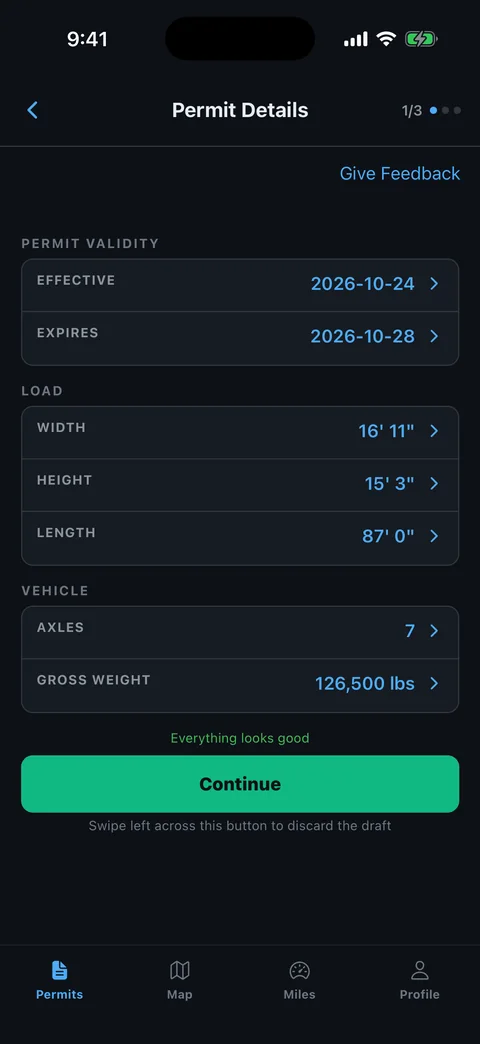
Which Fields Should Match the Loaded Combination?
Check the issued dimensions and equipment against the actual combination before reading the route as usable. A route reviewed for one load does not establish clearance or capacity for a changed configuration. Treat a mismatch as a permitting question.
Compare measured loaded height, width, overall length, projections, and weight information with the corresponding permit fields. Include the trailer and support equipment actually being used. Do not substitute an unloaded equipment specification for the loaded measurement.
- Identity: Match the permittee and vehicle fields with the dispatch documents.
- Configuration: Check that axle and trailer details describe the current combination.
- Measurements: Verify the loaded dimensions rather than a previous trip's numbers.
- Dates: Read the permitted movement period and any separate time conditions.
Keep a discrepancy list that names the exact field and the current value. The common permit-error guide gives a practical way to catch handoff mistakes without changing the issued document yourself.
How Do You Check the Maryland Route and Bridge Crossings?
Trace the authorized highway sequence and identify each crossing before following the map. Pay particular attention to roads around Baltimore and any route inherited from an earlier job. Familiar destinations can mask a materially different authorized approach.
SHA's current hauling-permit notice states that the Francis Scott Key Bridge is closed and that permits using it need rerouting through Maryland One. Do not replace that crossing in your GPS and assume the revised trip is authorized.
- Read the sequence: Start at the stated origin and follow every road in order.
- Locate crossings: Check which bridge or tunnel the route actually uses.
- Check approaches: Verify ramps and connecting roads, not just the main crossing.
- Compare notices: Resolve any closure or restriction affecting the route.
Use the permitted-route planning guide to record transitions and safe briefing points before departure.
What Does a Maryland Height Survey Tell You?
A height survey documents the clearance review required for an application; it is not the hauling permit itself. Compare its route and load height with the final issued route. A survey for a different approach does not explain an unreviewed segment.
SHA's height-survey guidance requires a clearance-route survey certification for applications above fourteen feet six inches. The same page links a route survey form. Check the current application instructions rather than reusing an old form without review.
- Route match: Compare the survey's roads with the final permit sequence.
- Height match: Check that the measured loaded combination is the one evaluated.
- Special maneuvers: Locate any instructions affecting lanes, structures, or coordination.
- Document clarity: Resolve an unreadable entry before the crew reaches that location.
Record questions for the office or survey preparer. Do not infer that an omitted obstruction was inspected or that an approved survey removes the need to follow current signs and restrictions.
Which Conditions Affect Travel Time and Escorts?
Read the permit's travel and escort conditions before promising an arrival time. General route permission, a travel window, and the practical availability of required support are separate checks. Finish all of them before dispatch.
SHA provides escort requirements, signing and lighting references, travel-time information, and escort waiting-area maps. Use the documents applicable to your movement. A generic escort summary should not overwrite a condition printed on the issued permit.
- Window: Read when the load may move on each affected section.
- Support: Confirm the required escort arrangements and meeting points.
- Waiting: Identify a suitable authorized place to hold before a restricted section.
- Communication: Brief the crew on bridge, lane, and route instructions together.
RouteAll's pilot-car route-sharing guide explains a shared route review. Keep the written conditions in that conversation, because a common map does not communicate every operating requirement.
What If a Closure or Permit Error Changes the Move?
Take the exact conflict to the SHA Hauling Permits Unit before using a different route. Maryland One is the agency's permitting channel; changing navigation does not establish approval. State the location and the part of the authorization that no longer fits.
- Describe the conflict: Give the highway, direction, crossing, or incorrect vehicle field.
- Describe the load: Have current dimensions, axle information, and configuration available.
- Explain the itinerary: Identify the origin, destination, and affected route segment.
- Keep the outcome: Retain the office response and revised issued material.
- Brief the change: Replace outdated driver and escort copies together.
The official hauling-permit page lists office contacts and after-hours emergency channels. Do not treat an emergency contact as permission to self-authorize a detour. Ask the office which road authority must resolve a local or facility-specific gap.
How Do You Review Maryland Directions in RouteAll?
Use RouteAll to make readable Maryland permit directions easier to inspect, then manually compare the result with the issued route. Keep the permit and its survey or condition documents available during that review.
The PDF-permit-to-GPS guide covers extraction and the required manual check. Start with the first and last points, then inspect every crossing and highway change. A carrier's office address, survey heading, or contact block should not become a navigation destination.
Check any bridge-related difference immediately. An attractive alternative on a map does not establish that Maryland One approved it for the load. Keep timing and escort requirements in your movement brief rather than expecting the map line to convey them.
After an official revision, repeat the comparison from the new issued documents. RouteAll does not issue Maryland permits, approve height surveys, or amend an authorized route.
A Maryland closure can force a change mid-trip; how to follow an oversize permit route explains what to do before you leave the permitted roads.
The Permit Check In One Minute
For Maryland, read the issued hauling permit together with its route, conditions, and any required survey. Compare the actual loaded combination with the authorized equipment and dimensions. Trace highway changes and bridge or tunnel crossings carefully, then check SHA notices before travel. The agency directs permits using the closed Francis Scott Key Bridge to be rerouted through Maryland One. Read timing and escort conditions before scheduling the move. If a closure, changed load, or incorrect field creates a conflict, identify the exact problem for the Hauling Permits Unit and keep the revised issued material. RouteAll can make permit directions easier to review on a map, but you must compare the extracted route with the authorization and retain the written conditions.
Before You Roll
Check the authorized crossing and its approaches against current SHA notices. Resolve any route conflict through the permit office before changing the movement, then replace all working copies together.
Further Reading
Sources And Scope
This guide explains how to read the state’s published permit material. Your issued permit and incorporated conditions govern the move. Check the linked agency material for updates.
- Hauling Permits — Maryland One, Key Bridge closure/rerouting notice, survey threshold, condition and restriction resources, escort references, contact channels.