 RouteAll
Maine Permit Reading Guide
Sources Reviewed: October 23, 2026
Read a Maine overlimit permit by checking the named carrier, stated route, validity period, and movement conditions. Then separate Maine Department of Transportation highways from Turnpike and municipal sections. A Bureau of Motor Vehicles permit does not automatically cover every road between pickup and delivery.
On This Page
What Makes Up a Maine Overlimit Permit Packet?
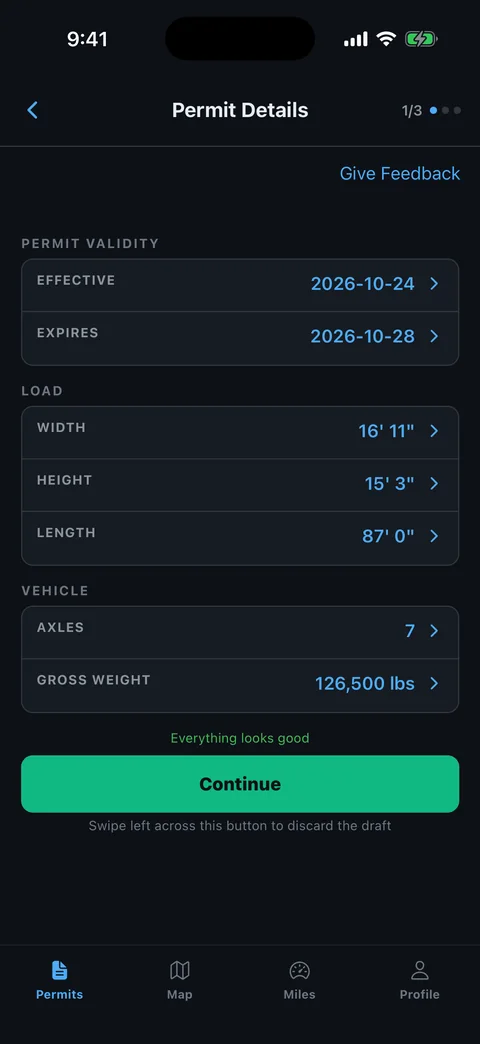
A complete Maine packet connects the stated route with the correct carrier, load, and period of travel. Keep the issued authorization and every movement-specific instruction together. Add separate Turnpike or local permissions where your trip needs them.
The Maine BMV overlimit page explains that permits are route-specific and time-limited. Do not substitute an application, inspection sheet, or payment receipt for the actual permit.
- Permittee: Compare the legal carrier name with the movement being dispatched.
- Load: Read the authorized dimensions and weight against the loaded combination.
- Dates: Identify the actual validity window, not merely the issue date.
- Instructions: Keep referenced restrictions and approvals available with the permit.
At a handoff, count the pages and open each file. A combined PDF can include documents from different jurisdictions. The document title and issuing agency matter more than the name somebody gave the file.
Which Roads Does Each Maine Permission Cover?
Separate MaineDOT roads, the Maine Turnpike, and local streets before assuming the trip is fully authorized. The BMV says its permits apply to roads and bridges under MaineDOT jurisdiction. Turnpike and municipal travel require their own review.
The official overlimit guidance states that the Turnpike has its own limits and permits. It also says carriers must obtain local permission when required. A road's appearance on a convenient map does not establish which agency controls it.
- State section: Match the BMV permit route with the highways under state authority.
- Turnpike section: Verify the separate Turnpike requirements for the actual combination.
- Local section: Identify the authority for streets leading to the shipper or receiver.
Mark each boundary in dispatch notes. Ask the permitting office or road authority about an uncertain section rather than treating a state route number as proof that the entire named road has one owner.
How Do You Trace the Stated Maine Route?
Follow the route in its written order and check how its first and last roads connect to the rest of the trip. A permit for a specific movement should not be read as permission to choose any convenient road within Maine.
Start with the origin named in the issued document. Trace each highway change and check the direction of travel. At junctions, identify the actual connection the truck needs, including the turn that enters the next road.
- Locate the beginning: Confirm the authorized approach from the pickup or previous state.
- Trace the sequence: Compare every written road with its map position.
- Check the end: Identify the point where state authorization stops.
- Check separate sections: Connect any Turnpike and local permissions without a gap.
Keep any notes on a separate movement sheet. For a first trip, the first permitted-route planning guide helps organize these checks before the departure briefing.
What Can Stop a Permitted Maine Movement?
A permit does not remove posted road or bridge restrictions, and difficult road or weather conditions can prevent travel. Check the route immediately before movement, rather than relying only on what was known when the permit was requested.
Maine BMV directs carriers to check road and weather conditions through New England 511 and wait when permitted-route conditions are difficult. Read the permit's time and holiday conditions separately from its expiration date.
- Postings: Check restrictions on each road and bridge you intend to use.
- Weather: Review conditions along the route, not just at your parked location.
- Travel window: Identify the applicable movement hours and holiday limitations.
- Stopping plan: Decide where the crew can wait safely before a restricted section.
A clear forecast at the destination does not answer whether an intermediate section is suitable. Share material changes with dispatch and escorts while there is still a safe opportunity to hold the movement.
How Do Escort Conditions Affect Your Departure?
Read the escort conditions before setting a departure time. A permit that requires police support also creates a coordination task; it does not mean a police vehicle has already been assigned to your load.
The BMV says the permittee must arrange any required Maine State Police escort with the appropriate field troop. Use the official overlimit page to reach the agency's current references. Avoid copying a phone number from an old dispatch sheet when arranging a new move.
Build a crew brief that gives the actual route, meeting place, required equipment, and condition-specific instructions. Check whether an escort change at a jurisdiction boundary leaves a gap in coverage.
- Assignment: Confirm who is supplying each required escort.
- Meeting point: Make sure it is reachable under the relevant authorizations.
- Communication: Agree on the method and the response to a route conflict.
The pilot-car route-sharing guide explains how to keep the navigation discussion tied to one reviewed route.
What If the Permit Describes the Wrong Move?
Return a mismatch to the BMV Overlimit Permit Unit before relying on the document. Provide the exact difference between the issued permit and the current movement. Keep Turnpike and local questions with the authority that controls those sections.
Do not silently replace a destination or truck identifier in a saved PDF. Your private note will not establish what the issuing authority approved. The BMV page provides the current contact route for questions.
- Describe the error: Identify the field, missing page, or road segment involved.
- Provide actual details: Have the loaded dimensions, weights, and equipment information ready.
- Explain the boundary: Identify any Turnpike or local section affected by the change.
- Review the response: Check the complete replacement packet before dispatch.
Once the issue is resolved, replace outdated working copies and tell the escort crew what changed. Read common state-permit errors for a repeatable handoff checklist.
How Can RouteAll Help You Review a Maine Permit?
RouteAll can help turn readable permit directions into a route for manual review. It cannot supply a missing Maine BMV authorization or decide whether a Turnpike or town permission covers your load. Keep those documents available separately.
Follow the PDF-permit-to-GPS guide and compare the extracted highway sequence with the issued Maine route. Inspect the endpoints especially carefully when one PDF contains several states or an additional inspection document.
Check every highway change before navigating. If extraction includes a carrier address or an office address as a route point, remove the mistake from your working route only after comparing it with the actual permit directions.
Keep the travel window, weather conditions, escort instructions, and separate authority boundaries in your crew brief. A reviewed map helps with orientation; it does not turn those written conditions into automatic legal approval.
Trace the stated Maine route on paper first, then follow the oversize permit route turn by turn on the road.
The Permit Check In One Minute
Maine uses overlimit permits for movements beyond legal size or weight. Read the permittee, the stated route, and the validity period before checking the map. Separate MaineDOT roads from the Maine Turnpike and local streets, because one permission does not automatically cover them all. Confirm the local portion at each end of the trip. Check current road postings and weather, then read the travel and escort conditions. Arrange any required police escort through the appropriate agency. If the packet contains an error or an unexplained route gap, resolve it with the authority responsible for that part of the move. RouteAll can help you compare readable permit directions with a map, but you must still review the route and keep the issued permissions available.
Before You Roll
Trace the entire move across state, Turnpike, and local boundaries. Do not depart with an unexplained authorization gap or a permit that describes a different carrier, load, or movement.
Further Reading
Sources And Scope
This guide explains how to read the state’s published permit material. Your issued permit and incorporated conditions govern the move. Check the linked agency material for updates.
- Overlimit Permits — BMV issuing unit, MoveME access, route and time limits, Turnpike/local boundaries, conditions, and police escort arrangements.