 RouteAll
Georgia Permit Reading Guide
Sources Reviewed: October 23, 2026
Read a Georgia oversize permit by matching the transporter and load, approved roads, dates, and movement conditions. Identify the permit category before using annual or single-trip rules. Georgia’s official resources distinguish the permit route, routing log, posted bridges, and holiday schedule.
On This Page
Which Georgia Agency and Permit Category Apply?
Confirm the issuer and category before interpreting the packet. Georgia’s official transportation page directs orders to GAPROS and identifies the Department of Public Safety as responsible for the Oversize Permit Unit. A permit service may deliver the file, but the state’s issued document supplies the authority.
Use the Georgia Oversize Permits page to reach the official process. Identify single-trip, annual, or specialized authority and read the scope printed on it.
Keep application records separate from the issued movement document. If dispatch supplies several PDFs, label which one contains the approved route and which ones are supporting information. A familiar company name or a paid invoice does not resolve that distinction.
What Must a Georgia Single-Trip Permit Describe?
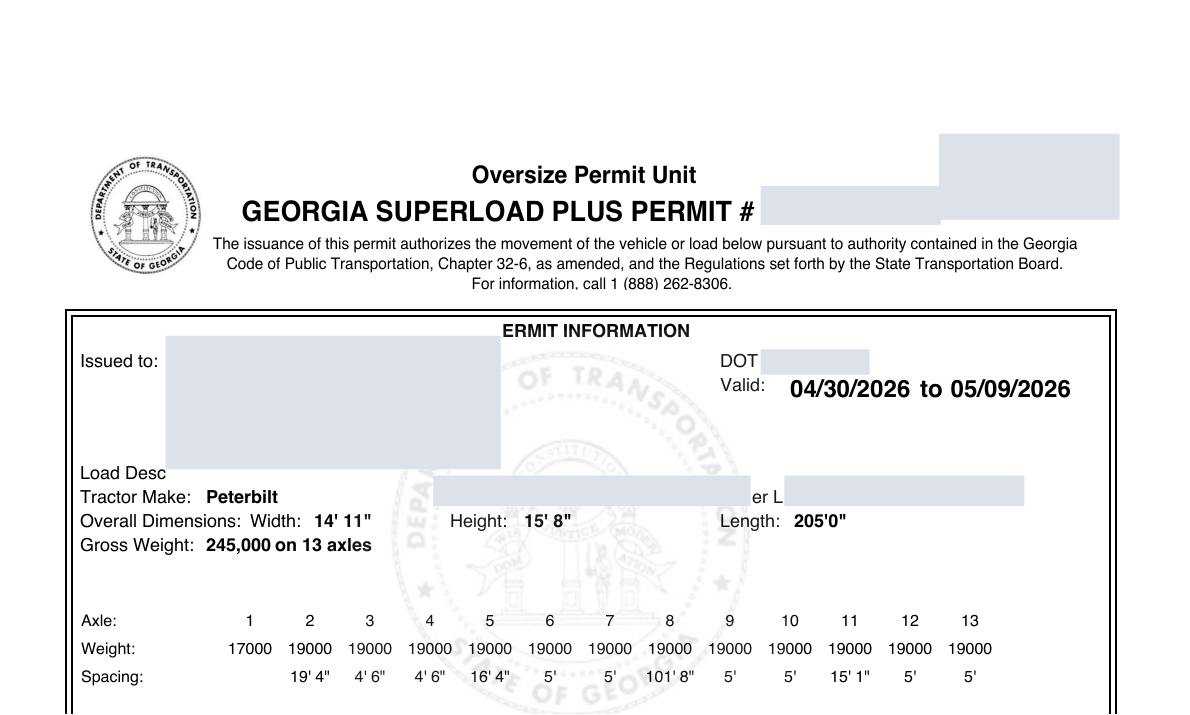
Read the movement facts as a single group: transporter, load, endpoints, approved roads, and allowed time. Georgia’s permit page describes these as part of single-trip authority. Do not assume that a similar load on the same truck is the same approved movement.
Compare the issued document with the actual equipment and dispatch plan. Use the official Georgia permit description to understand the document’s purpose, then verify the specific values printed in your copy.
- Transporter: Match the hauling company and vehicle information.
- Load: Confirm the actual item and transport configuration.
- Route: Preserve endpoints and intermediate roads.
- Movement time: Check dates and any narrower window.
How Do the Georgia Route Map and Routing Log Differ?
Use each official resource for the question it answers. Georgia provides a route map, routing log, posted-bridge information, and holiday schedule as separate resources. A map helps locate the road; a log or restriction entry may explain a condition that a simple map line does not communicate.
Reach those resources through the Georgia routing links rather than relying on an old saved result. Match the road number, direction, and exact affected location against the permit.
For planning, create a segment list with the road, transition, and condition. Keep a short connector or repeated highway occurrence in place. The permitted-route planning guide explains how to compare that list with navigation while preserving the state’s sequence.
Why Do Gross and Axle Details Need Separate Attention?
Check the loaded configuration rather than reading only one total weight. A permit review needs the dimensions and weight information that describe the actual truck, trailer, and load. Equipment changes can affect that description even when the cargo itself has not changed.
Read every axle entry or configuration reference supplied with the issued packet. Compare spacing and distribution where listed. Mark any number you cannot verify instead of filling it from an earlier permit.
Use a measurement worksheet to communicate corrections precisely. “The trailer changed” is less useful than identifying the printed configuration and the proposed replacement. The common permit-errors guide explains review habits that help catch these mismatches before a route is accepted.
What Should You Check About Georgia Escort Instructions?
Separate the movement’s escort requirement from the escort operator’s credentials. Georgia’s official page provides escort-certification information and describes electronic certification cards. Neither a credential nor a booking by itself tells the crew which positions and operating conditions apply to this particular permit.
Use the Georgia escort information with the issued conditions. Confirm the required arrangement for each segment and verify that the operator’s current credential is appropriate through the official program.
Brief lead and rear positions, communication, meeting points, and any coordination task. Keep the permit’s wording available rather than relying on a verbal summary. The pilot-car duties guide provides practical briefing topics for the crew.
How Do Annual Conditions and Holiday Restrictions Affect the Plan?
Read the particular annual category and current movement restrictions before scheduling a repeat haul. Georgia lists several permit types, and its official page links holiday information separately. An annual period does not mean every road, load, or departure time is covered.
Consult the Georgia permit types and holiday resources and compare their scope with the document in the cab. If a printed condition narrows the route or movement time, put that instruction directly into the dispatch plan.
Plan where the crew can wait before a restricted segment. Do not infer a loaded return trip from an outbound approval. The annual versus single-trip guide helps separate repeated-use authority from a specific movement.
How Do You Resolve Wrong Georgia Permit Details?
Take the precise discrepancy to the Oversize Permit Unit or your ordering service before movement. Identify the wrong field or route segment and the actual facts. Ask which GAPROS correction or replacement process applies to the issued document. The official Georgia permit page provides the portal and contact entry points.
Do not change the PDF, navigation path, or crew notes and treat that edit as state approval.
- Record the issue: State the printed and actual facts.
- Obtain direction: Confirm the correct official process.
- Read the replacement: Check the full route and conditions again.
- Brief everyone: Replace obsolete copies before the crew departs.
How Can RouteAll Help Review a Georgia Permit?
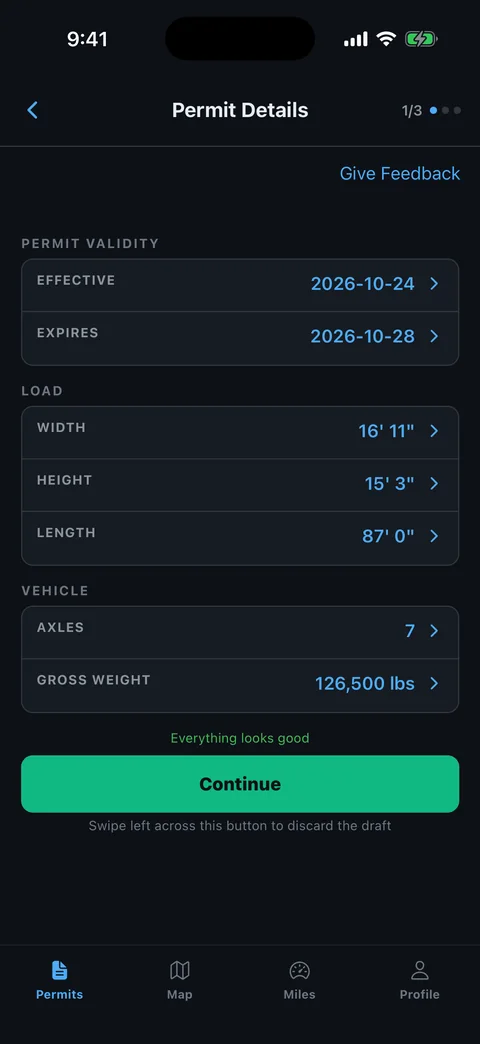
Use the PDF permit to GPS route workflow to read the issued source and review extracted facts before confirming navigation. Compare every Georgia road, direction, and endpoint with the printed route. RouteAll does not issue or amend GAPROS permits. Keep the original document, applicable conditions, and separate official route checks available.
For escort coordination, the pilot-car route-sharing workflow helps the team discuss the same reviewed path while the issued permit supplies the movement instructions.
Drive the Georgia routing log, not the map alone; how to follow an oversize permit route shows ways to keep that log in front of you.
The Permit Check In One Minute
A Georgia permit review begins with the issued category and the movement it describes. Confirm the transporter, load, loaded configuration, endpoints, roads, and movement dates. Georgia directs permit orders to GAPROS, while the Department of Public Safety is responsible for the Oversize Permit Unit. Check the route map, routing log, posted-bridge information, and holiday schedule for their separate purposes. Read the specific escort instructions and confirm appropriate operator credentials. An annual permit still needs its own scope and conditions checked. Resolve wrong facts through the official process before departure. RouteAll can help read the PDF and review a proposed navigation route, but it cannot change Georgia’s approval.
Before You Roll
Compare the issued Georgia road list with its applicable conditions before scheduling the crew. Resolve discrepancies through the Oversize Permit Unit and distribute the same current document to everyone involved.
Further Reading
Sources And Scope
This guide explains how to read the state’s published permit material. Your issued permit and incorporated conditions govern the move. Check the linked agency material for updates.
- Georgia Oversize Permits and Regulations — Issuer and GAPROS, single-trip facts, separate routing resources, permit categories and escort credential information.
- GAPROS permit portal — Portal linked by the official Georgia agency page; portal transaction not performed.