 RouteAll
Colorado Permit Reading Guide
Sources Reviewed: October 23, 2026
Read a Colorado extra-legal permit by matching the loaded vehicle, permit type, approved road sequence, and special conditions. Then check the relevant clearance, weight, and oversize restrictions. Colorado’s freight resources separate these checks because a road that works for one dimension may fail another.
On This Page
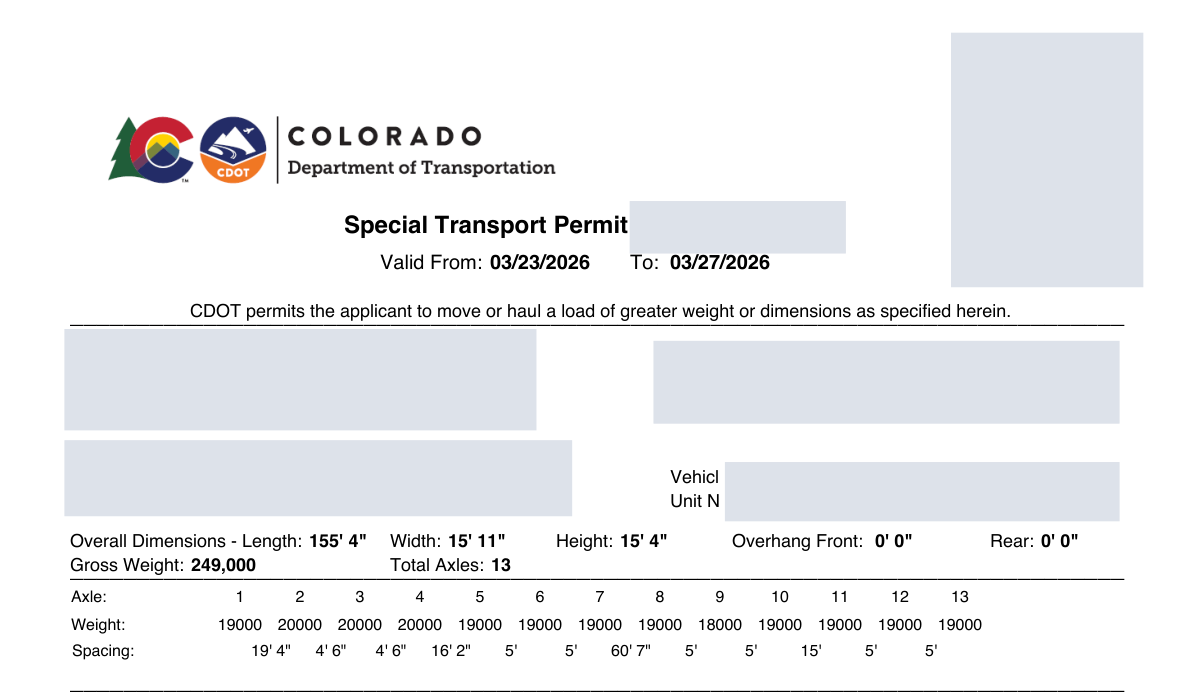
Which Colorado Authorization Does Your Packet Contain?
Identify the actual permit type before reading its allowance. Colorado uses the term extra-legal for vehicles or loads outside legal limits. The document may grant a particular trip or another defined scope; its title and conditions determine what you are reviewing.
The COOPR system is CDOT’s permitting and routing portal. Confirm that dispatch supplied an issued document for this movement, rather than a saved routing proposal or an application waiting for review.
Record the approved vehicle, load, dates, and any movement-specific conditions. Separate the permit from a route survey or planning map. Supporting material may be essential, but it must be paired with the authority it supports rather than treated as a substitute for it.
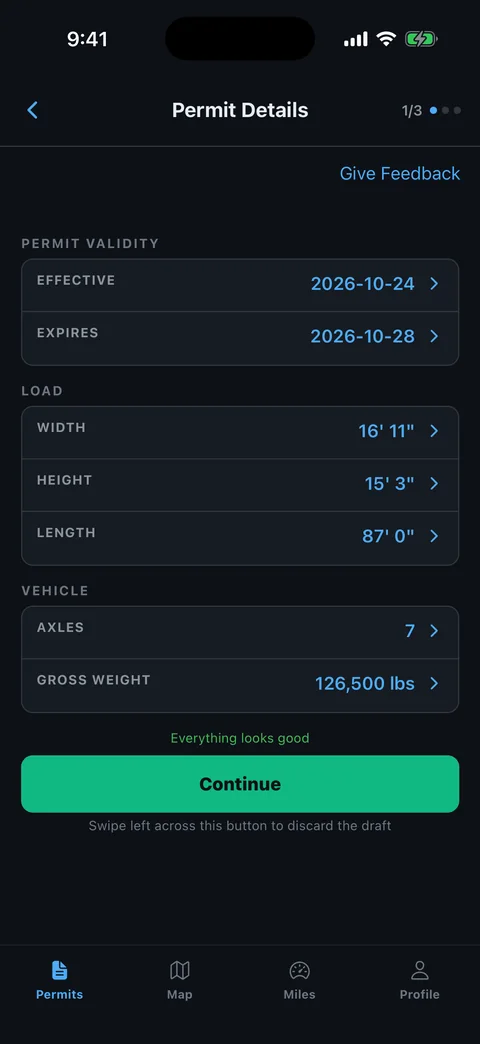
Why Do Height, Weight, and Oversize Maps Need Separate Checks?
Check each relevant restriction layer against the same proposed route. Colorado’s freight resources provide clearance information, bridge-weight resources, and an oversize restriction list. These tools describe different physical or operational constraints; one favorable result does not establish that the entire combination fits.
Start with the CDOT rules and restriction resources. Match the road segment and location, then compare the permitted loaded dimensions and axle configuration with the relevant limitation.
- Height check: Locate the structure and the actual travel path.
- Weight check: Use the configuration and axle information involved.
- Oversize check: Identify width, length, or operating conditions.
- Current closure: Check changing traffic information separately.
How Do You Read Colorado Road and Reference-Point Entries?
Follow every printed road, direction, junction, and location reference in order. A reference point or short highway segment can define where a restriction applies. Preserve that location when preparing notes or reviewing an extracted route. For a mountain-corridor movement, do not replace a detailed route with a city-to-city search.
That search may choose a different pass, interchange, or direction. The permit’s sequence needs its own review even when the destination is familiar.
Make a segment worksheet containing the printed road, its entry and exit, and any attached instruction. Mark uncertain connections for clarification. The permitted-route planning guide explains how to compare a map line with a road list without silently dropping connectors.
What Do Colorado Darkness and Pilot-Escort Conditions Mean?
Read night authority with the loaded dimensions, road type, required lighting, and escort instructions. Colorado’s freight guidance distinguishes daylight from darkness and describes different night-movement arrangements. A general ability to travel at night does not establish that your particular configuration qualifies.
Use the Colorado hours-of-darkness guidance and the conditions on your permit. Brief any changes in escort position when the road changes from one configuration to another.
Write the arrangement as a segment-specific crew plan. Identify who leads, who follows, the communication method, and the place where the plan changes. The pilot-car duties guide helps the crew discuss responsibilities, while Colorado’s instructions determine the actual requirement.
What Should You Read Before a Colorado Mountain Segment?
Use CDOT’s mountain-road resources alongside your permit, not in place of it. The freight site links mountain rules, chain-up information, hot-brake guidance, Wolf Creek Pass information, and COtrip road conditions. Choose the material relevant to the actual permitted road. The Colorado freight homepage gathers these resources.
Read current construction and closure information before departure, then compare any conflict with the issued route.
Include suitable holding locations in the dispatch discussion. A map’s arrival estimate does not account for every restriction, coordination task, or pause your movement needs. If a closure appears to require another road, obtain official direction rather than treating a passenger-car detour as an amended permit. The off-permit route guide explains the practical issue.
How Do You Resolve a Colorado Permit Discrepancy?
Take the specific issue to the permitting office or your ordering service before moving. Describe the printed road or vehicle fact, the actual situation, and the proposed change. Changing a route in navigation cannot change the COOPR authorization. Use the contact information on the CDOT freight rules page for the current permitting channel.
Ask which amendment or replacement process applies rather than assuming a universal self-service edit.
- Locate the problem: Name the field and affected road segment.
- Provide the facts: Include the actual loaded measurements or configuration privately.
- Obtain direction: Confirm what official document the driver needs.
- Review again: Compare the entire revised route and distribute the current packet.
How Can RouteAll Help Prepare the Colorado Route?
The PDF permit to GPS workflow explains how RouteAll reads a permit and requires your review before route confirmation. Compare the extracted Colorado roads, directions, endpoints, and conditions with the issued packet. Keep restriction and mountain-road checks in the planning process.
A route line does not prove a bridge’s clearance or authorize a different pass. RouteAll does not issue or amend Colorado permits.
Use the pilot-car route-sharing workflow to discuss the reviewed path with your escort. Give the crew the actual night, lighting, and segment conditions too, so everyone understands where the operating plan changes.
Mountain segments leave little room to turn around, so follow the Colorado permit route turn by turn and do not let a phone pick another pass.
The Permit Check In One Minute
Colorado permit review requires several separate route checks. Start with the issued COOPR document and match the truck, load, dates, and road sequence. Then check the relevant height, bridge-weight, and oversize resources for those roads. Read darkness and pilot-escort conditions together rather than assuming a broad night-travel permission applies to the load. For mountain routes, use CDOT’s mountain guidance and current COtrip information. Resolve a closure or wrong vehicle fact through the permitting process before changing the plan. RouteAll can help read a permit PDF and review a proposed route. It cannot replace restriction checks, clearance work, or the state’s approval for a different road.
Before You Roll
Check every applicable restriction layer against the same Colorado road sequence. Resolve a conflict before departure, and brief the escort crew on the exact segment where conditions change.
Further Reading
Sources And Scope
This guide explains how to read the state’s published permit material. Your issued permit and incorporated conditions govern the move. Check the linked agency material for updates.
- Colorado Freight and Permitting — Mountain, road-condition, construction and permit resources.
- CDOT Rules & Regulations — Restriction resources, darkness and escort framework, official permit contacts.
- COOPR Login — Official portal identity and routing help.