 RouteAll
Lead And Chase Pilot Cars
Last verified October 23, 2026. Operational guidance draws on FHWA training; current state rules and the issued permit control each movement.
A lead pilot car travels ahead of an oversize load and reports what the truck will encounter. A chase car follows behind and watches approaching traffic and the load’s rear. Both communicate with the driver. The permit and jurisdiction determine the required arrangement, equipment, and authorized operations.
On This Page
What Is The Difference Between Lead And Chase?
The main difference is the information each position can see and report. The lead looks ahead of the truck; the chase observes from behind. Neither is a spare driver with a warning sign. Each needs an assigned role, the current route, and a clear communication plan.
This comparison describes the work, not a rule assigning escorts to every load. FHWA’s load-movement guidelines explain the complementary positions.
| Question | Lead Escort | Chase Escort |
|---|---|---|
| Where Is It? | Ahead Of The Load | Behind The Load |
| Primary View | Upcoming Roads And Hazards | Rear Traffic And Load Condition |
| Useful Report | Location And Nature Of An Upcoming Obstruction | Rear Traffic Or A Visible Load Problem |
| Shared Task | Communicate The Approved Movement Plan | Communicate The Approved Movement Plan |
The names describe positions. They do not by themselves establish traffic-control authority or an operator’s qualifications.
What Should The Lead Escort Know Before Departure?
The lead needs to understand the actual road sequence and the hazards relevant to the loaded truck. A direction report is useful only when the driver can identify the location and respond in time. Read the issued route, applicable survey, and special instructions before starting.
FHWA’s Trip Operations module describes navigation, hazard monitoring, communication, and height-pole work where applicable. The job is more than reaching the destination first.
- Next transition: Identify the road, direction, and junction being approached.
- Known issue: Connect the briefing note to its actual location.
- Unclear instruction: Resolve it before entering the affected section.
- Changed conditions: Communicate the conflict rather than silently choosing another road.
A map line cannot settle an unconfirmed clearance. Keep any required survey or coordination task in the movement plan.
What Should The Chase Escort Watch And Report?
The chase gives the driver information from a position the truck cannot fully observe. That includes traffic approaching from behind and visible problems with the load or transport vehicle. The useful report names what changed, where it is, and why the movement team needs to respond.
FHWA’s rear-escort guidance discusses traffic, shifting loads, tire problems, and tie-down issues. It also explains the rear operator’s contribution during merging and lane changes.
For the crew brief, agree who reports a problem and how the driver acknowledges it. Avoid several people talking over a time-sensitive report. The practical aim is a message the team can understand, not a running commentary on everything visible.
If the crew loses the agreed communication method, follow the plan established before movement. Do not improvise a maneuver because the truck continues ahead.
Does Leading Or Chasing Authorize You To Stop Traffic?
No escort position creates universal authority to control traffic or disregard traffic laws. Determine the permissions, training, and procedures applicable to the jurisdiction and permit. A warning light, job booking, or instruction from another crew member cannot supply an authority the operator does not have.
FHWA’s Trip Operations guidance states that escorts must obey traffic laws and discusses traffic-control work within authorized circumstances. Read that training alongside the state’s actual requirements.
Use the state permit-reading directory to locate the issuing authority. Confirm a specialized traffic-control question with the responsible agency rather than treating this role comparison as legal permission.
Which Details Belong In The Pre-Trip Briefing?
Brief the specific movement before discussing individual preferences. Confirm the loaded configuration, current permit version, road sequence, operating conditions, and responsibilities. Everyone should know the next required action and the response to an uncertain route, changed condition, or communication problem before the crew separates.
FHWA’s Pre-Trip Activities module recommends gathering and documenting load, carrier, route, and scheduling information in advance. Use a short checklist to make missing information visible.
- Match the packet. Confirm that everyone is reading the same current movement.
- Trace the roads. Identify significant turns, crossings, and handoffs.
- Assign the roles. Agree who handles each required task.
- Test communication. Confirm the method and acknowledgement before moving.
- Plan interruptions. Identify how the crew will handle a closure, delay, or amendment.
The first pilot-car job guide expands this preparation for a new operator.
What Changes When The Permit Or Escort Arrangement Changes?
Pause the affected plan and brief the changed facts before resuming that part of the movement. A new permit route, different loaded measurement, or escort handoff can affect several responsibilities. Sending a new destination pin does not explain those changes to the whole crew.
Use the change as a comparison task: what did the old packet say, what does the current authority say, and who needs to act differently?
- New route: Compare the full sequence and any neighboring-state connection.
- New condition: Identify its location, timing, and assigned action.
- New operator: Repeat the briefing instead of assuming a handoff passed every detail.
- Old copies: Replace obsolete working versions and screenshots.
Read common permit errors when a field or document version does not match the actual move.
How Does A Shared Route Help The Lead And Chase?
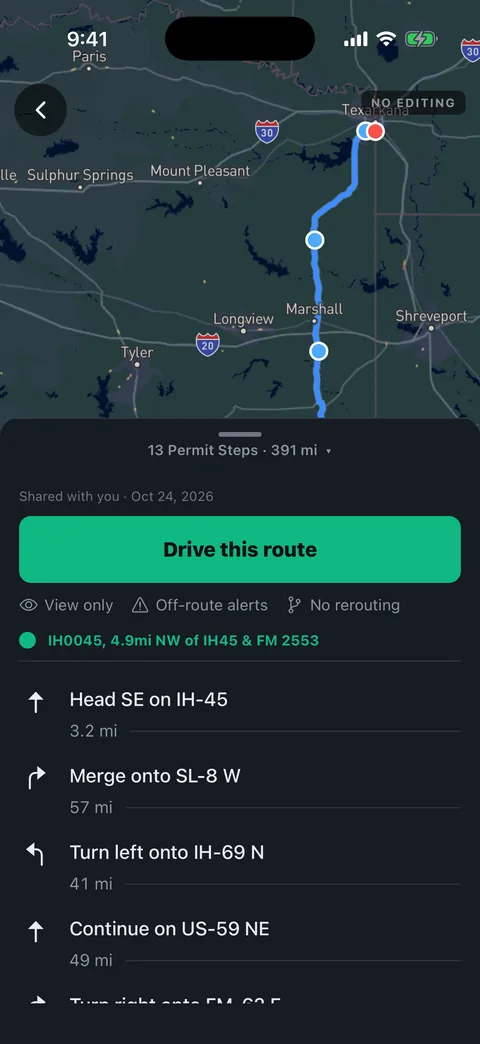
A shared reviewed route gives the crew a common reference for its briefing. It helps identify the same turn or segment without requiring everyone to rebuild directions from a delivery address. Keep the actual permit and operating instructions available alongside the map, and confirm the version after a change.
RouteAll’s free route-sharing workflow lets a hauler share the route and an escort view it without an account or subscription. Compare the route with the issued roads before the crew uses it.
For independent pilots, Pilot Pro also provides job records and pilot invoice exports. Those records support the business side of an assignment; they do not determine the legally required escort arrangement. Confirm the agreed role and rates with the customer separately.
The Roles In One Minute
The lead pilot car travels ahead and helps the driver understand what is coming. The chase follows behind and adds information about rear traffic and visible load problems. Both need the same current route and a communication plan. Read the permit and applicable rules to determine the required positions, equipment, and authorized tasks. Leading or chasing does not grant general traffic-control authority. Before departure, brief the loaded combination, road sequence, conditions, and response to a conflict. Repeat the relevant briefing when a permit or operator changes. A shared RouteAll route can help everyone discuss the same path, while the original permit and written instructions remain available to the crew.
Before You Roll
Confirm who leads, who chases, and which written conditions each person must act on. Resolve unclear authority or route instructions before the movement reaches that decision.
Sources And Scope
FHWA training supplies the operational framework above. ODS North America’s role overview also distinguishes the front escort’s advance view from the rear escort’s supporting view. This is an original RouteAll guide, not a report of field testing or a state-by-state staffing rule.