 RouteAll
Iowa Permit Reading Guide
Sources Reviewed: October 23, 2026
Read an Iowa oversize permit by identifying its exact type, matching the loaded vehicle, and checking road scope, route approval, dates, and General Provisions. All-systems, annual, and multi-trip permits do not grant identical road access. Use the map and approval process named for your category.
On This Page
Which Iowa Permit Category Are You Reading?
Read the full permit title before using a rule about routes or duration. Iowa separates single-trip, multi-trip, annual oversize, annual oversize/overweight, and all-systems authority, with additional specialized categories. Similar names can describe different road and vehicle limits. The Iowa permit-type guide explains these distinctions.
Match the issued category with the loaded equipment and intended movement rather than choosing the closest familiar label.
Keep the face sheet, route approval if required, and referenced provision material together. A payment receipt or annual document from a previous category does not answer whether the new load is covered. The annual versus single-trip guide provides a useful comparison framework.
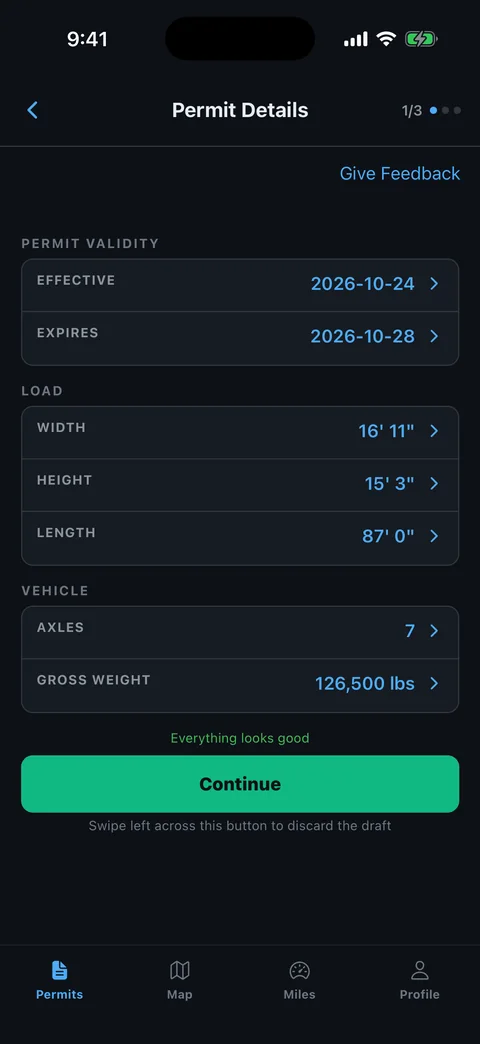
Does an Iowa Multi-Trip Permit Let You Choose Different Roads?
Read the route limitation, not just the number of trips. Iowa’s permit guide describes a multi-trip category between fixed points on one specified route. Repeated use does not mean each driver can choose another path to the same site. Use the Iowa multi-trip descriptions and the actual issued road list.
Compare origin, destination, direction, and any authorized return arrangement before scheduling repeated movements.
Give each driver the same current route and conditions. If a construction change makes the road unsuitable, ask what new authority or correction is required rather than substituting another road. Preserve the route version with the job’s dispatch information so a familiar destination does not hide a changed approval.
What Does All-Systems Mean on an Iowa Permit?
Check the participating-road map for the exact all-systems category. Iowa’s guide distinguishes all-systems oversize from all-systems overweight authority. Their scope is not identical, and the term does not mean unrestricted use of every local road. Use the all-systems permit descriptions to reach the appropriate map.
For oversize authority, the All Systems Oversize Permit Route Map identifies participating coverage.
Mark the actual site approach and confirm that every local segment is included or separately authorized. A county’s participation does not automatically answer a question about a particular street. Record the road and issuer responsible for any gap before treating the movement as continuous.
When Does an Iowa Annual Permit Need Route Approval?
Check the conditions of the particular annual category and loaded measurements. Iowa explains that certain annual movements require route approval when specified dimensions are exceeded. A valid annual document can therefore still need another movement-specific step. The Iowa annual permit descriptions identify categories and the route-approval path.
Compare your issued facts with those instructions instead of applying a threshold from a different annual permit.
Keep the resulting approval with the annual authority when required. If dispatch sends only the annual face sheet, ask whether this movement needs a route approval and which document confirms it. The answer should come from the correct category and actual vehicle, not from the fact that the truck traveled the route before.
Which Iowa Maps Should You Check Before Moving?
Review construction, clearance, bridge, and pavement information for the actual road sequence. Iowa’s annual-permit guidance identifies these as separate checks and links 511 information. A successful check of one layer does not establish that all movement constraints have been addressed.
Start with the official resources linked from Iowa’s OSOW permit page. Match the affected road and location with the permit and loaded configuration.
- Construction: Check the relevant work-zone segment.
- Clearance: Identify the actual structure and travel path.
- Bridge: Compare applicable restrictions and configuration.
- Pavement: Read any movement limitation for the road.
The permitted-route planning guide helps organize these checks without replacing official instructions.
How Do General Provisions Affect Escorts and Travel Hours?
Read the applicable Iowa General Provisions with the issued permit and movement conditions. The permit office links a dedicated provision document. Do not substitute another state’s escort or daylight table because the load crosses that state first. Use the Iowa Oversize Load Permit General Provisions linked by Iowa DOT.
Confirm the current full document and the instructions that apply to your category before scheduling the crew.
Make a segment brief for travel windows, escorts, communication, and stopping points. Keep any unclear requirement on a question list for Motor Carrier Services rather than treating silence in a summary as permission. The pilot-car duties guide provides useful crew discussion topics.
What Should You Do When an Iowa Permit or Route Is Wrong?
Resolve the discrepancy with Motor Carrier Services or your ordering service before movement. Identify the category, permit status, wrong field or route segment, and the actual facts. Ask whether the existing document can be corrected or another approval is required.
The Iowa OSOW page supplies the official contact and system resources. Do not assume an annual route approval, a single-trip correction, and a new multi-trip route use the same process.
- Record the issue: Compare printed and actual facts.
- Ask the issuer: Request the correct official process.
- Review the result: Check route, dates, scope, and provisions again.
- Replace old copies: Brief the crew from the current packet.
How Can RouteAll Help Review an Iowa Permit?
Use the permit PDF to GPS workflow with the issued source. RouteAll reads the document and requires review before route confirmation. Compare Iowa road order, endpoints, directions, and any separate approval against the proposed line. Keep the General Provisions, applicable maps, and original authority available.
RouteAll does not issue or amend Iowa permits. An attractive navigation line cannot expand all-systems coverage or replace a required route approval. Resolve those questions before accepting the route.
Whatever the Iowa permit type, follow the oversize permit route turn by turn on the roads it authorizes for that trip.
The Permit Check In One Minute
For Iowa, begin with the full permit category. Single-trip, multi-trip, annual, and all-systems documents have different scopes. A multi-trip permit can require one specified route, while some annual movements need separate route approval. All-systems authority depends on the category and participating roads, so check the actual site approach. Match the loaded vehicle and read the applicable General Provisions. Review construction, clearance, bridge, and pavement resources for the route before departure. Take a wrong fact or road to Motor Carrier Services for the correct process. RouteAll can help read the PDF and review navigation, but it cannot expand the permit’s scope or supply missing approval.
Before You Roll
Confirm the Iowa category, road coverage, and any required route approval before dispatch. Read the current provisions with the permit, and resolve local-road or restriction gaps before confirming navigation.
Further Reading
Sources And Scope
This guide explains how to read the state’s published permit material. Your issued permit and incorporated conditions govern the move. Check the linked agency material for updates.
- Iowa DOT Get Oversize and Overweight Permits — Official system, general provision and map resources, contact.
- Iowa DOT Types of Oversize/Overweight Permits — Category-specific multi-trip, annual and all-systems scope and route approval.
- All Systems Oversize Permit Route Map — Official route-map purpose and location.
- Form 442052 Oversize Load Permit General Provisions — Official provision-document endpoint; embedded form shell read, full sheet not extractable in research browser.