 RouteAll
Idaho Permit Reading Guide
Sources Reviewed: October 23, 2026
Read an Idaho special permit by matching the vehicle, load, permit category, route, dates, and attachments. Use the ITRPS resources for the particular movement, including route-capacity, pilot-escort, bridge, and vertical-structure information. Do not substitute an old overlegal rule PDF for the current special-permit rules.
On This Page
Which Idaho Permit System and Rules Should You Use?
Start from ITD’s current permit guide and the issued ITRPS document. Search results can return older Idaho overlegal manuals or earlier rule numbers. A familiar PDF title does not establish that it is the edition governing today’s movement. The ITD permit guide links the official commercial-vehicle permit system.
Use the current IDAPA 39.03.01 special-permit rules for the present rule chapter, rather than relying on a historical search result.
Identify the category on the issued permit and collect its named attachments. Keep any general information sheet separate from movement-specific approval. If a downloaded document appears to be a draft or pending-rule version, ask the permit office before treating it as current law.
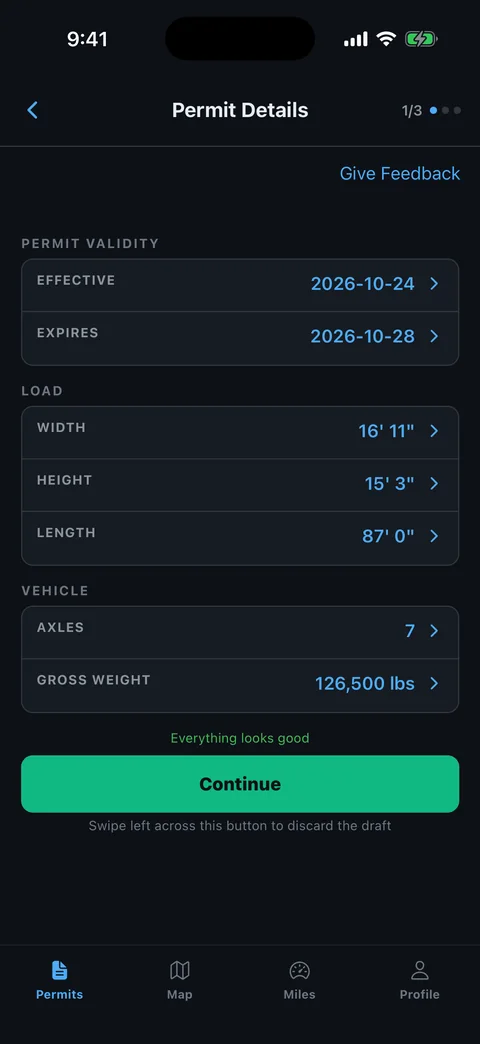
What Does Your Idaho Permit Category Actually Cover?
Read the permit’s category, vehicle identity, load, dimensions, weight configuration, and time period together. Extra length, excess weight, oversize movement, and other specialized authority should not be treated as a single unrestricted permission. Compare the actual loaded combination with the printed facts.
A change of trailer, axle spacing, transport position, or overhang can affect more than one field. Record every discrepancy before asking the office what official action is needed.
- Vehicle: Match the equipment named in the authority.
- Load: Confirm the described item and loaded position.
- Configuration: Read axle and projection entries separately.
- Scope: Identify the permitted roads and period.
The permit-errors guide offers a useful comparison checklist.
How Do Idaho’s Route-Capacity and Escort Resources Differ?
Use the map for the question it answers. ITRPS Helpful Links separates route-capacity maps, pilot-escort information, vertical structures, posted bridges, and certain specialized route resources. A road shown on one resource does not automatically resolve every other restriction. Open these documents from the official ITRPS Helpful Links menu.
Match the applicable permit category and exact road segment before using a map entry in your plan.
When color or a symbol controls a condition, read that map’s own legend. Do not transfer a color meaning from another state or another Idaho map. Record the road, affected location, and the condition you need to satisfy. The permitted-route planning guide explains a practical segment review.
Does the Idaho Permit Cover a City or County Road?
Read the route’s jurisdiction before assuming the state document covers local access. Idaho’s special-permit rules distinguish ITD’s authority from local highway authority and address agreements between them. The presence of a nearby state route does not establish permission for the city street leading to a site.
Consult the authority provisions in IDAPA 39.03.01 and the scope of your issued document. ITRPS also lists particular local resources, which must be read for their actual coverage rather than generalized statewide.
Mark where the route leaves the state roadway and identify who controls the next segment. Confirm the complete approach to the actual yard entrance. A navigation route to the address is useful for orientation, but cannot settle that permit question.
How Do You Read Idaho Pilot-Escort and Travel Conditions?
Read the pilot-escort resource and permit conditions for the specific loaded combination and road. Keep escort requirements distinct from the road list: one identifies where the load goes, while the other defines actions or support needed for that movement. Use the relevant resources from ITRPS Helpful Links and the current rules.
Confirm lead and rear positions, height-pole duties where required, communication, and any movement-specific coordination.
Put the travel window beside the escort plan. If a timing condition changes the proposed meeting or stopping point, resolve it before the crew departs. The pilot-car duties guide provides useful briefing questions without replacing Idaho’s issued conditions.
What Should You Recheck During Spring Breakup or Roadwork?
Review current changing conditions alongside the permit. ITRPS lists a Spring Break Up Season resource and links Idaho road conditions. A permit date range does not tell you that every road condition has stayed unchanged since dispatch first planned the haul.
Use the ITRPS current links for the actual route. Compare any restriction with the loaded configuration and approval. If the information appears inconsistent, ask the permit office before interpreting a map absence as permission.
Prepare the document and route while connected, then keep the source packet accessible during the trip. Make a plan for a closure or communication gap. The off-permit route guide explains why an ordinary detour may need official review.
How Do You Request an Idaho Permit Amendment?
Use the official amendment request instead of editing the issued PDF yourself. The ITRPS FAQ describes opening the Company Dashboard, choosing the permit’s Select menu, and selecting Request Amend. The request includes a reason and is submitted for the appropriate action.
Read the ITRPS amendment FAQ before proceeding. A submitted request is not evidence that the requested change has been approved. Confirm the final document and applicable conditions before movement.
- State the mismatch: Identify the printed field and correct fact.
- Request amendment: Explain the reason through ITRPS.
- Check the result: Read the issued route and conditions again.
- Replace old copies: Give everyone the same current packet.
How Can RouteAll Help Review Your Idaho PDF?
The permit PDF to GPS workflow explains RouteAll’s extraction and required driver review. Compare the proposed Idaho road sequence, directions, endpoints, and vehicle facts with the issued source before confirming navigation. Keep Idaho’s maps, attachments, and current conditions in the review.
RouteAll does not issue or amend ITRPS permits, and a proposed line cannot replace local permission or a road-capacity check. Resolve unclear facts before accepting the route.
Recheck Idaho roadwork and spring breakup limits on the day, then follow the oversize permit route turn by turn and request an amendment before any change.
The Permit Check In One Minute
For Idaho, start with the issued ITRPS permit and the current special-permit rules. Older overlegal documents can appear in search results, so check the source and category. Match the loaded vehicle, dimensions, weight configuration, dates, and road sequence. Read the appropriate route-capacity, escort, vertical-structure, and bridge resources separately. Confirm local-road authority at the site approach. Recheck spring-breakup and changing road conditions when relevant. If a fact is wrong, the ITRPS FAQ describes a Request Amend workflow, but the request still needs an official result. RouteAll can help read the PDF and review a proposed route. It cannot amend Idaho’s authority or replace the permit packet.
Before You Roll
Use the current Idaho rule chapter and maps for the exact permit category. Resolve local access and restriction questions before confirming the route, and wait for the official result of an amendment request.
Further Reading
Sources And Scope
This guide explains how to read the state’s published permit material. Your issued permit and incorporated conditions govern the move. Check the linked agency material for updates.
- ITD Permits Guide — Official system link.
- ITRPS Login and Helpful Links — Portal name, current map/attachment resources and contact; Helpful Links read from public HTML.
- Current IDAPA 39.03.01 Rules Governing Special Permits — Current rule chapter and department/local authority structure.
- ITRPS FAQ and Answers — Request Amend process.