 RouteAll
Kentucky Permit Reading Guide
Sources Reviewed: October 23, 2026
Read a Kentucky oversize permit by matching the truck and load, approved roads, dates, and movement conditions. Separate single-trip, annual, and specialized authority. Check the route’s highway and restriction context, then confirm escorts and clearances. Kentucky expressly says permit issuance does not guarantee safe passage.
On This Page
Is the Kentucky Permit Single-Trip, Annual, or Specialized?
Read the title and scope before applying a general Kentucky rule. Single-trip, annual, house-move, metal-commodity, and feed authority address different movements. A long validity period does not mean the same roads and conditions apply across every category. The Kentucky permit page explains the specialized options.
The official permit FAQ describes single-trip authority as specific to the vehicle, route, and load.
Compare the actual movement with the issued facts. Keep any route approval, survey, or supporting condition with the correct permit. The annual versus single-trip guide helps distinguish repeated-use authority from permission for a particular haul.
Which Kentucky Truck and Load Fields Need Matching?
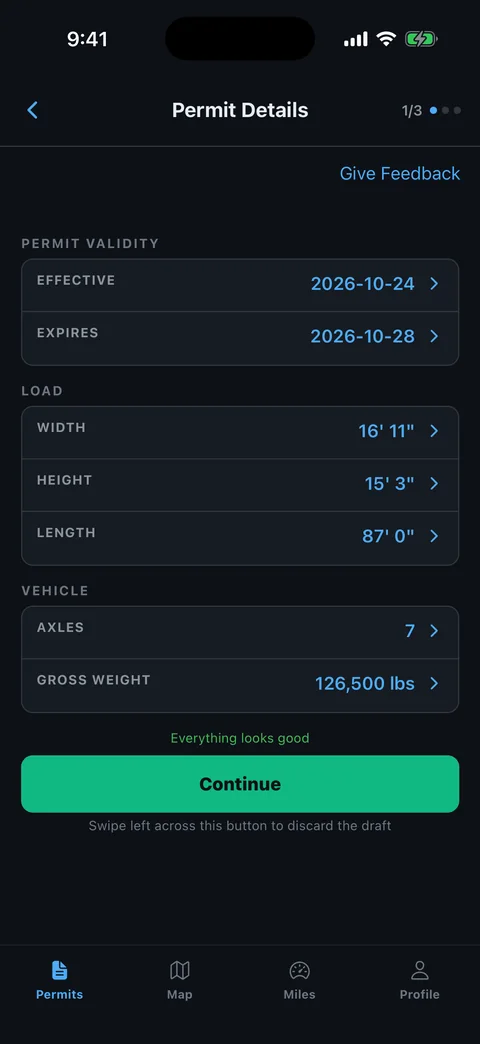
Compare the entire loaded combination with the permit. Check hauling equipment, load description, width, height, length, projections, and weight information. Preserve the printed units and separate entries when preparing notes. A familiar machine does not guarantee an unchanged transport configuration.
A different trailer, repositioned attachment, or changed overhang can affect the movement described by the authority. Record the exact difference before asking which official action is required.
- Truck identity: Match the actual power unit.
- Load identity: Check the item and transport position.
- Overall measurements: Use the complete loaded combination.
- Weight details: Read configuration and road limits separately.
The permit-errors guide offers a practical review checklist.
Which Roads Does the Kentucky Permit Actually Cover?
Read the approved road sequence and the authority for each segment. Kentucky’s travel provisions limit the state permit to roads maintained by the Transportation Cabinet. A delivery address can still require an approach outside that coverage. Use the Kentucky Travel Provisions with the issued route.
Confirm the actual road and its jurisdiction at pickup, delivery, and any connection between state sections.
Preserve every highway, direction, junction, and short connector in order. At a border, compare the printed crossing with the next state’s entry. The permitted-route planning guide explains how to trace those transitions without assuming the nearest bridge or exit is authorized.
Does Kentucky Permit Approval Guarantee That the Load Fits?
No. Kentucky expressly places clearance-checking responsibility on the permit holder and says issuance does not guarantee safe passage. A printed route therefore does not remove the need to resolve an uncertain overhead or lateral obstruction for the actual loaded vehicle.
Read the responsibility section of Kentucky Travel Provisions. Identify the structure or location, loaded measurement, and any necessary coordination before the truck reaches it.
Keep clearance and survey material associated with the issued configuration. If the load or trailer changes, do not assume an earlier check remains sufficient. Explain the change to the responsible office or qualified party and obtain the required direction before proceeding.
How Do Kentucky Escort Requirements Change With Road Type?
Read the two-lane and multi-lane sections separately. Kentucky’s escort guidance distinguishes road type and several dimensions rather than presenting one universal pilot-car count. The arrangement for one section of the haul may differ from the next. Use the Kentucky Escort Requirements with the issued conditions.
Confirm lead and rear positions, height-pole work where required, and any survey or other special requirement.
Mark the point where the operating arrangement changes. Brief communication and meeting locations before movement, rather than deciding at the junction. The pilot-car duties guide provides practical crew questions without replacing Kentucky’s requirements.
Why Must You Check Restricted Areas Even With Broad Travel Hours?
Read the permit’s exceptions and the current location-specific travel restrictions before planning the day. Kentucky’s FAQ distinguishes general travel guidance from mobile-home rules and restricted counties or a named bridge. A broad statement about continuous travel cannot settle every segment.
Consult the Kentucky travel-time FAQ for the current framework and compare the actual roads. Check whether a condition is tied to location, movement type, time, or a special permit instruction.
Put the last suitable stopping point before a restricted area into the crew plan. Include escort coordination and the next departure window. The travel-time restriction guide helps combine those windows with neighboring states.
Can You Amend a Kentucky Single-Trip Permit?
Do not assume that a single-trip permit can be amended. Kentucky’s FAQ says these permits are not amended except to correct an error made by the issuing Permit Section. It describes a different, limited amendment rule for annual permits. Read the Kentucky amendment FAQ before promising dispatch an easy correction.
Identify the document type, wrong fact, actual value, and whether the mistake originated in the issued authority. Ask the Permit Section what official document the movement now needs.
- Identify the category: Separate single-trip from annual authority.
- Explain the error: Give precise printed and actual facts.
- Obtain direction: Request the proper correction or replacement.
- Review again: Compare the full route and conditions before travel.
How Can RouteAll Help Read the Kentucky Permit?
The permit PDF to GPS workflow explains RouteAll’s extraction and required manual review. Use the issued document and compare Kentucky roads, directions, endpoints, dates, and loaded facts with the proposed route. Keep the original authority and applicable conditions available. RouteAll does not issue or amend Kentucky permits, and a navigation line does not guarantee clearances.
Resolve a skipped road, local-access gap, or unexpected shortcut before accepting the proposed route.
Confirm which roads the Kentucky permit covers, then follow the oversize permit route turn by turn and keep restricted areas out of the plan.
The Permit Check In One Minute
For Kentucky, identify the permit category before reading its allowance. Single-trip authority describes a specific vehicle, route, and load, while annual and specialized permits have their own scope. Match the loaded combination and trace the approved roads through every junction and border crossing. Confirm local-road authority where the route leaves Cabinet-maintained highways. Kentucky says permit issuance does not guarantee safe passage, so resolve clearance questions. Read two-lane and multi-lane escort requirements separately, and check restricted areas alongside the travel window. Single-trip amendments are generally unavailable except for an issuing-section error. RouteAll can help read the PDF and review navigation, but it cannot change Kentucky’s authority or replace those checks.
Before You Roll
Check the Kentucky permit category before requesting a correction or planning a repeat move. Confirm road authority, clearances, escort arrangements, and restricted areas for the actual loaded combination.
Further Reading
Sources And Scope
This guide explains how to read the state’s published permit material. Your issued permit and incorporated conditions govern the move. Check the linked agency material for updates.
- Kentucky OW/OD Frequently Asked Questions — Single-trip scope, amendment distinction, general versus restricted-area travel framework.
- Kentucky Travel Provisions — Cabinet-road scope and permit holder clearance responsibility; page read successfully earlier, later requests timed out.
- Kentucky OW/OD Permits — Specialized permit categories and official portal.
- Kentucky Escort Requirements — Two-lane/multi-lane structure, height-pole and survey framework.