 RouteAll
Connecticut Permit Reading Guide
Sources Reviewed: October 23, 2026
Read a Connecticut oversize permit by checking the permit category, vehicle and load, approved route, movement dates, and operating conditions. An annual indivisible permit also requires a route authorization for each trip. Keep the annual document and that trip’s approval together.
On This Page
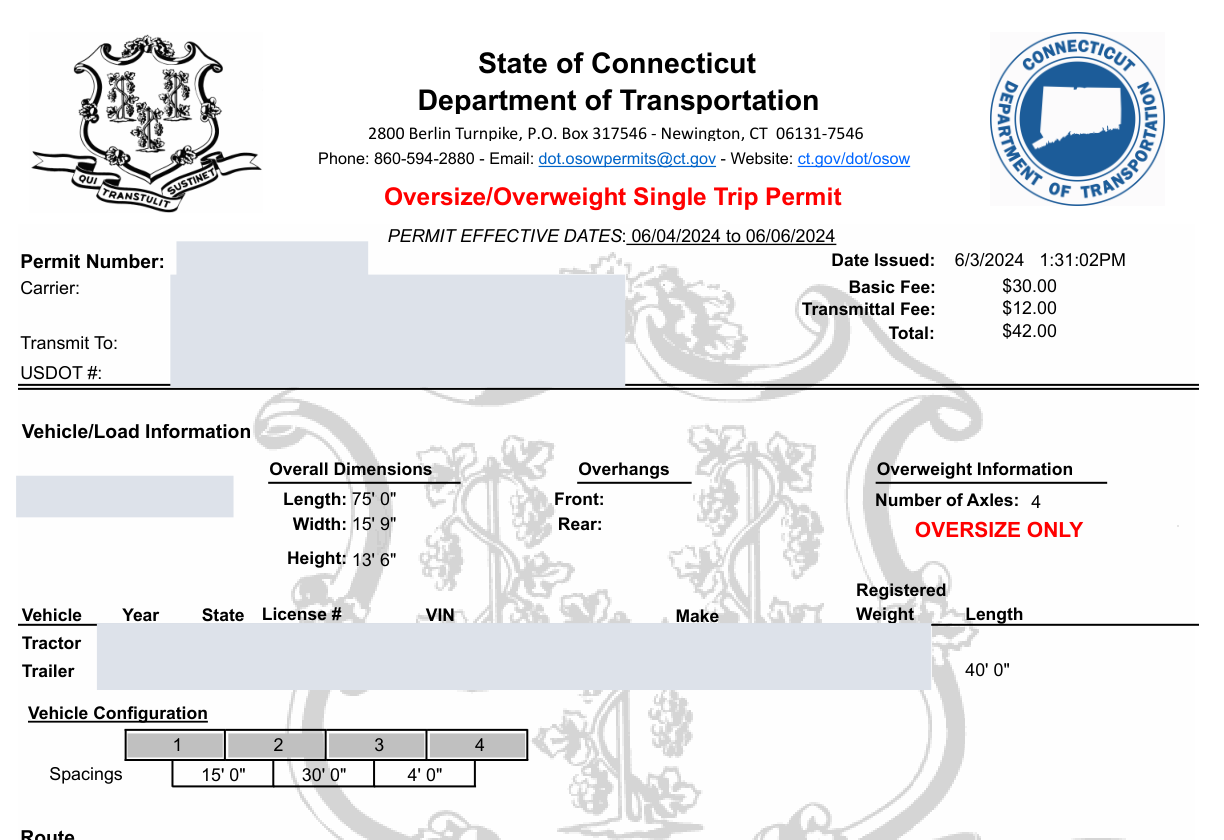
Which Connecticut Permit Category Are You Reading?
Find the category before applying a rule about validity or travel. Connecticut lists single-trip, annual indivisible, divisible, industrial, milk, and radioactive permit categories. They address different vehicles or loads; a document’s annual duration alone does not describe its road authority.
The CTDOT permit page explains these categories and links the CVO WebPortal. Match the category to the movement actually planned.
Keep the permit face, any route approval, and referenced conditions together. A portal confirmation or payment record belongs in the office file, but it does not answer whether the final route and operating conditions have been issued. Ask for the completed movement packet before briefing the driver.
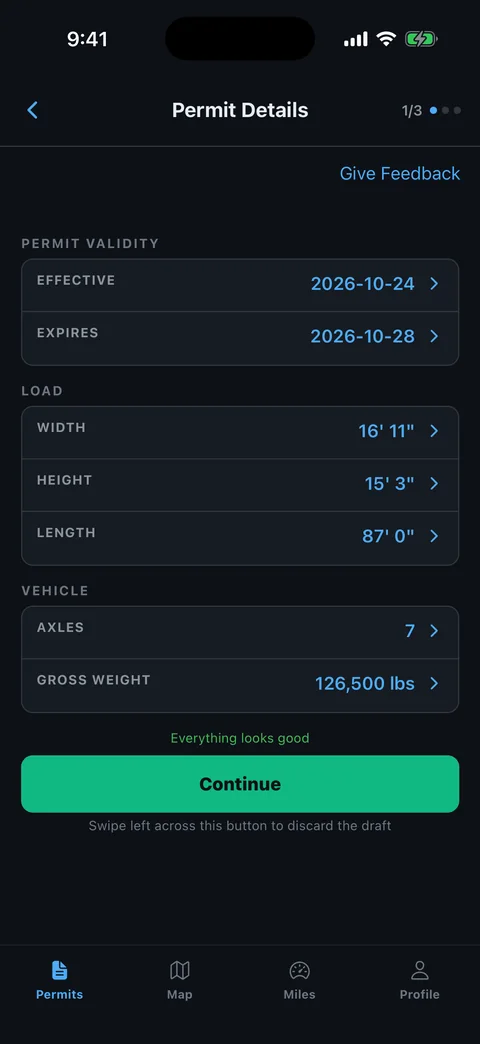
Why Does an Annual Indivisible Permit Need Route Authorization?
Read the annual permit and trip authorization as a pair. Connecticut’s annual indivisible instructions require a route authorization for each trip after the annual permit has been issued. The annual identifier is therefore a starting point for the movement, not a replacement for its route approval.
Use the new annual indivisible permit instructions to understand that sequence. Compare the approved vehicle, the annual reference, the actual trip, and the road list before combining the pages.
If dispatch sends only the annual permit, ask for the authorization for this trip. If several route files exist, identify the one issued for the movement you will make. The annual versus single-trip permit guide explains the distinction between ongoing eligibility and specific road permission.
Which Connecticut Bridge Restriction List Applies?
Use the restriction material for the permit category you hold. Connecticut publishes different bridge resources for divisible and indivisible permits. Selecting the wrong list can make a route review appear complete while answering a different vehicle or load question. Reach the official lists through the CTDOT permit resources.
Locate the relevant road and structure, then compare the configuration and conditions in your own packet.
- Permit category: Confirm divisible or indivisible authority.
- Structure location: Match road, direction, and any location reference.
- Vehicle facts: Compare axle configuration and loaded measurements.
- Special instruction: Preserve any restriction or coordination printed for the movement.
Do not replace an unreadable bridge reference with a nearby structure simply because the map looks similar.
How Do You Read the Connecticut Route Across Junctions?
Trace the approved road sequence junction by junction. Preserve direction, connecting ramps, the actual entry point, and the final authorized approach. A delivery address and the nearest highway exit are different pieces of information. Prepare a short list with printed road, transition location, and next road.
Use that list to compare the route map with the document. When a road appears twice, identify the separate occurrences rather than merging them.
If the path leaves the approved route for a terminal approach or a stop, resolve the authority for that section before scheduling it. The permitted-route planning guide helps organize the comparison. A consumer navigation suggestion does not amend the Connecticut approval.
What Do Civilian and State Police Escort Entries Mean?
Read each escort column and footnote for the actual road and load. Connecticut’s FAQ distinguishes divided and undivided highways, civilian escorts, and Connecticut State Police escorts. It also explains that route conditions can require additional services beyond the general table.
Use the CTDOT escort FAQ with the issued permit. Confirm which entries apply, rather than reading a mark in one column as a universal requirement for the whole haul.
Brief front and rear positions, meeting points, and coordination for the affected segment. Ask the office to resolve an unclear condition before booking only the minimum crew you expected. The pilot-car responsibilities guide supplies practical briefing topics without changing Connecticut’s requirement.
Does the Connecticut Permit Actually Authorize Weekend Travel?
Check the issued dates and explicit travel permission. Connecticut describes a requested weekend-travel option for eligible single-trip movements and separately publishes holiday restrictions. A permit whose date range touches Saturday does not by itself answer the weekend-travel question. Consult the current CTDOT permit and holiday page and the conditions on your document.
Read the actual authorization rather than inferring permission from an application choice.
Make a schedule that identifies the last suitable stopping point before a restricted period. Include escort meeting time and the next road segment’s conditions. The travel-time and curfew guide can help combine multiple state windows into the same dispatch plan.
How Do You Correct Wrong Facts in a Connecticut Packet?
Ask the CTDOT Permit Office or your ordering service to resolve the discrepancy before departure. Identify the permit category and the wrong field, then explain the actual truck, load, date, or route. Ask whether the annual document, route authorization, or both need attention.
The CTDOT FAQ provides the official permitting contact. Do not assume changing data in a local copy or a navigation app corrects the issued approval.
- Identify the document: Separate annual authority from the trip approval.
- Describe the mismatch: State the old and correct facts privately.
- Receive official direction: Obtain the required corrected packet.
- Compare the result: Recheck every route transition and condition.
How Can RouteAll Help With the Connecticut Review?
Use the PDF-to-GPS workflow after assembling the issued documents. RouteAll reads the PDF and asks you to review extracted facts before confirming a proposed route. Compare the road sequence and endpoints with the actual trip authorization. Keep the annual authority and applicable restriction material available independently.
RouteAll does not issue or amend Connecticut permits, and a navigation line does not establish bridge approval or escort compliance. Resolve an unclear route or condition with the issuing office before treating the movement as ready.
Keep each Connecticut junction in the printed order as you follow the oversize permit route turn by turn.
The Permit Check In One Minute
A Connecticut review begins with the permit category. Annual indivisible authority needs a route authorization for each trip, so keep both documents together. Match the actual vehicle and load, then read the approved road sequence through every junction. Use the bridge restriction resource for the correct permit category. Read the civilian and State Police escort columns carefully, including their road-type distinctions and footnotes. Confirm requested weekend travel and current holiday restrictions against the issued conditions. If a fact is wrong, ask the Permit Office which document needs correction. RouteAll can help read a permit PDF and review a proposed route, but the state’s issued packet remains the authority for the movement.
Before You Roll
For annual indivisible work, confirm the trip route authorization before departure. Read the issued road, bridge, escort, and time conditions together, and obtain clarification for any mismatch.
Further Reading
Sources And Scope
This guide explains how to read the state’s published permit material. Your issued permit and incorporated conditions govern the move. Check the linked agency material for updates.
- CTDOT Oversize/Overweight Vehicle Permits — Permit categories, route authorization, bridge resources and holiday/weekend framework.
- CTDOT OSOW Frequently Asked Questions — Escort table structure, additional route-specific escort conditions and contact.
- New Annual Indivisible Permit Instructions — Annual permit then per-trip route-authorization workflow.